Why All-Black Workout Fits Show Sweat Differently Than Lighter Colors
Quick Answer: Black hides sweat better than lighter colors because it already absorbs nearly all visible light, so the extra light-absorption that happens when fabric gets wet barely changes its appearance. Lighter colors reflect a lot of light when dry, so the shift to absorbing more light when wet creates a stark, visible contrast — that’s the “dark patch” effect. But black isn’t sweat-proof: dried salt and deodorant residue actually show up more clearly against black than against lighter or patterned fabric.
You’ve probably picked black leggings for a heavy workout specifically to avoid the dreaded wet patch, and then noticed white salt rings around your waistband later that afternoon. Both things are true at once, and they come down to the same basic mechanism working in opposite directions.

What Actually Happens to Fabric When Sweat Hits It?
Dry fabric fibers scatter light in a lot of directions — that’s what makes a color look opaque and even. When a fiber gets wet, the water fills in the microscopic air gaps between and inside the threads. Water has a different refractive index than air, and that change alters how light travels through the fabric: instead of scattering back out toward your eye, more light gets absorbed or passes through.
The net effect is that wet fabric always absorbs more light and reflects less than the same fabric dry — regardless of color. This is a universal property of wet textiles, not something specific to any one shade. You can test this with a plain white napkin: the wet spot always looks darker and slightly more translucent than the dry surrounding area, because it’s absorbing more light and letting more pass through to whatever’s underneath.
The color of the fabric determines how noticeable that shift is. A light-colored fabric starts out reflecting a large percentage of light — often 60-80% for pastels and whites. When it gets wet and that reflectance drops, the contrast between wet and dry areas is dramatic, sometimes a 30-40 percentage point difference in light reflected. Your eye reads that gap instantly as a visible, high-contrast patch.
A black fabric, by contrast, is already reflecting very little light when dry — often under 10%. When it gets wet and reflects even less, the change is only a few percentage points. There’s simply not enough of a gap between “black and dry” and “black and wet” for your eye to register a strong contrast, which is the entire mechanism behind why dark colors read as more sweat-resistant.
Myth vs. Fact: Does Black Actually Hide All Sweat?
Myth: Black workout clothes hide sweat completely — you can wear black through any workout intensity and never see marks.
Fact: Black minimizes the visibility of the wet-patch contrast effect, but it doesn’t eliminate two other very real things that happen when you sweat heavily: texture change and residue.
Even though the color contrast is minimal, heavy sweating still changes how fabric drapes and catches light — a soaked black fabric can look slightly shinier or clingier in certain lighting angles (especially direct overhead gym lighting or flash photography), because the smoother, wetter surface reflects light more directionally instead of scattering it. It’s a subtler tell than a visible patch, but it’s there if someone’s looking closely or if you’re under strong lighting.
The bigger myth-buster: black shows dried sweat residue more than most other colors. Sweat contains salt, and as it evaporates, salt crystals are left behind on the fabric surface. Those white-ish mineral deposits contrast heavily against black — the same high-contrast principle that hides wet patches on black works against it here, because now you have a genuinely light-colored substance (dried salt) sitting on a genuinely dark background. This is why waistbands, underarms, and back panels on black leggings and tanks often develop faint white or grayish rings after a long, sweaty session, even though the wet patch itself was invisible in the moment.
Deodorant and antiperspirant residue behaves the same way — the aluminum-based compounds in antiperspirant can leave a chalky film that’s far more visible against black than against a busy print or a mid-tone color.
Which Colors Actually Perform Best for Heavy-Sweat Workouts?
If minimizing visible wet patches during the workout is your top priority, black and other very dark, low-reflectance colors (charcoal, navy, deep maroon) perform best for the reason above — low starting reflectance means a small visible shift when wet.
Mid-tone, busy, or patterned fabrics are actually the best overall performers when you factor in both wet-patch visibility and dried residue visibility. A heathered gray, a marled fabric, or a print breaks up the surface into many small areas of varying tone, so neither a wet patch nor a salt mark reads as one obvious contiguous shape — your eye can’t lock onto a clean edge the way it can on a solid color.
Solid light colors — white, pastel, pale gray — perform worst for wet-patch visibility for the reasons covered above, but they don’t have the residue problem black does, since dried salt doesn’t contrast as sharply against an already-light background.
The practical takeaway: no single color is sweat-proof. If you’re choosing based on workout intensity, black is the safer bet for the workout itself, but pairing it with a quick post-workout rinse or wipe-down of high-sweat zones (waistband, underarms) prevents the residue issue from becoming visible later in the day.
5 Mistakes People Make Assuming Black Solves Their Sweat Problem
1. Assuming fabric type doesn’t matter if the color is black. A heavy cotton-blend black tee will show more texture change and take longer to dry than a technical moisture-wicking black fabric, even though the color hides the wet-patch contrast equally well on both. Wicking fabric pulls moisture to the surface to evaporate faster, which matters for comfort and odor even if you can’t see the sweat.
2. Not rinsing or wiping down after workouts, then wondering about the white rings. The salt-residue issue is largely preventable — a quick cold-water rinse of sweat-heavy areas before the fabric fully dries keeps crystals from setting into the fibers.
3. Wearing the same black leggings for days without a real wash. Dried salt and antiperspirant buildup compounds over multiple wears, making residue marks worse over time and also breaking down the elastane fibers that give leggings their stretch.
4. Choosing black assuming it also solves odor. Color and odor-control are unrelated. Odor comes from bacteria breaking down sweat compounds, which depends on fabric antimicrobial treatment, not color.
5. Standing under harsh overhead lighting for photos and being surprised black still shows shine. As covered above, texture and sheen changes from moisture are still visible even when color contrast isn’t — direct overhead light exaggerates this more than diffused light.
FAQ: All-Black Workout Sweat Questions, Answered
Is black really the best color for hiding sweat, or is that just a myth?
It’s genuinely true, and it comes down to how little light black reflects to begin with — there’s very little contrast left to create between “dry black” and “wet black.” It’s one of the few pieces of activewear folklore that actually holds up to the physics.
Why do I still get white marks on my black leggings even though I never see a wet patch?
That’s dried sweat salt, not a wet patch — a completely different phenomenon happening after the fact rather than during the workout. It’s more visible on black precisely because black provides high contrast against light-colored residue.
Does washing black leggings in cold water help with the residue issue?
Yes — cold water is generally more effective at dissolving and rinsing out salt crystals and mineral deposits than hot water, which can sometimes set certain residues into synthetic fibers.
Are there fabrics that solve both the wet-patch and residue problem?
Technical fabrics with a tight, moisture-wicking weave reduce both issues somewhat by moving sweat to the surface faster for evaporation, which limits how long moisture — and eventually salt — sits concentrated in one spot. But no fabric or color fully eliminates either effect during a genuinely heavy sweat session.
TL;DR:
- Wet fabric always absorbs more light and reflects less than dry fabric — that’s true for every color, not just black.
- Black starts out reflecting so little light that the wet/dry contrast is barely noticeable, which is why it hides sweat visually better than light colors.
- Black does NOT hide dried salt residue or deodorant marks — those show up as light-colored deposits against a dark background, often after the workout is over.
- Busy patterns and mid-tones minimize both wet-patch visibility and residue visibility better than any solid color, light or dark.
Black hides the moment, not the aftermath — plan your post-workout rinse accordingly.
See It in Motion
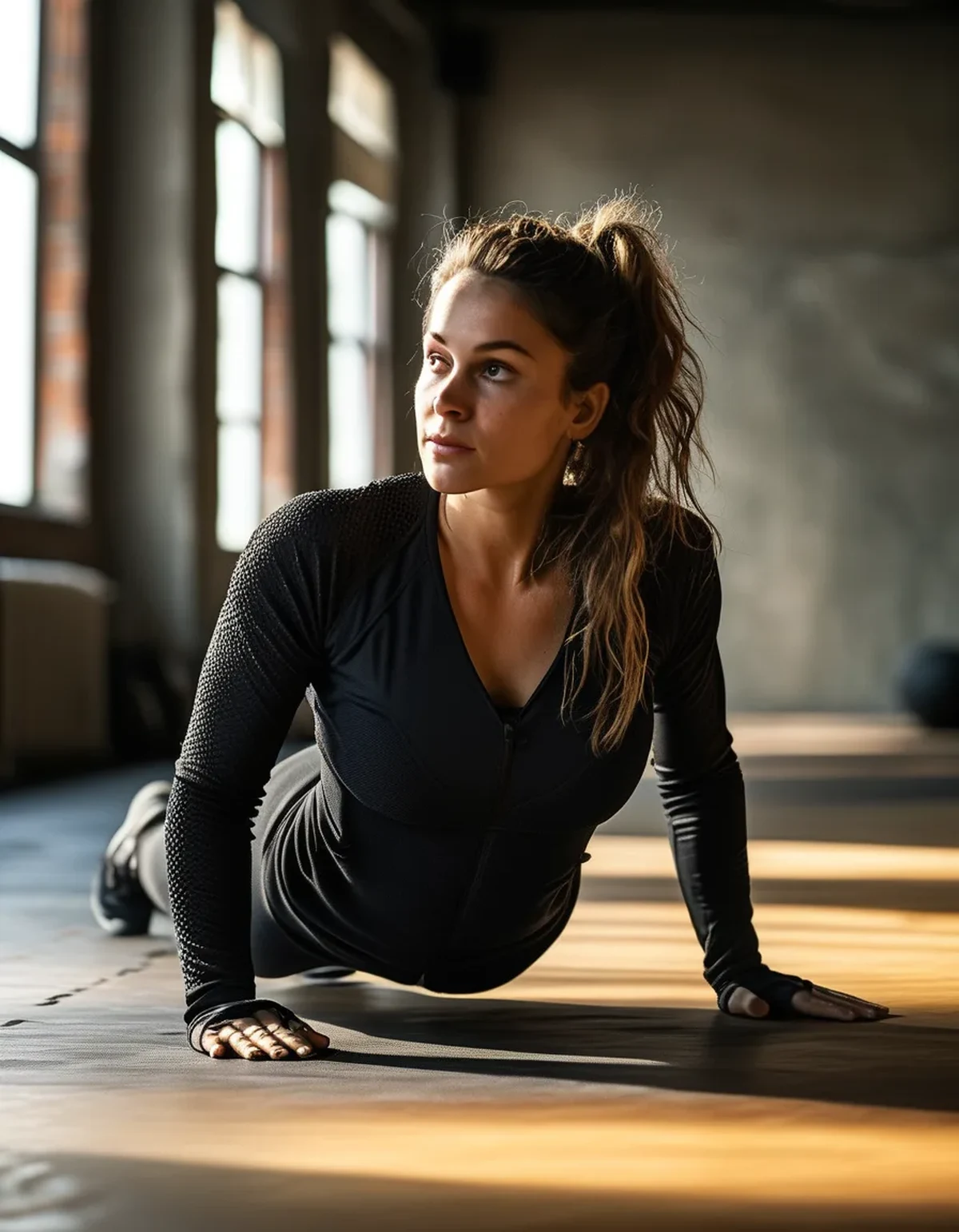
Seen here: Super High Waist Embossed Yoga Leggings with Inner Pocket — shop it on bubblelime.com
Keep Reading
This article is for general informational and styling purposes only. Fit, sizing, and product availability may vary.