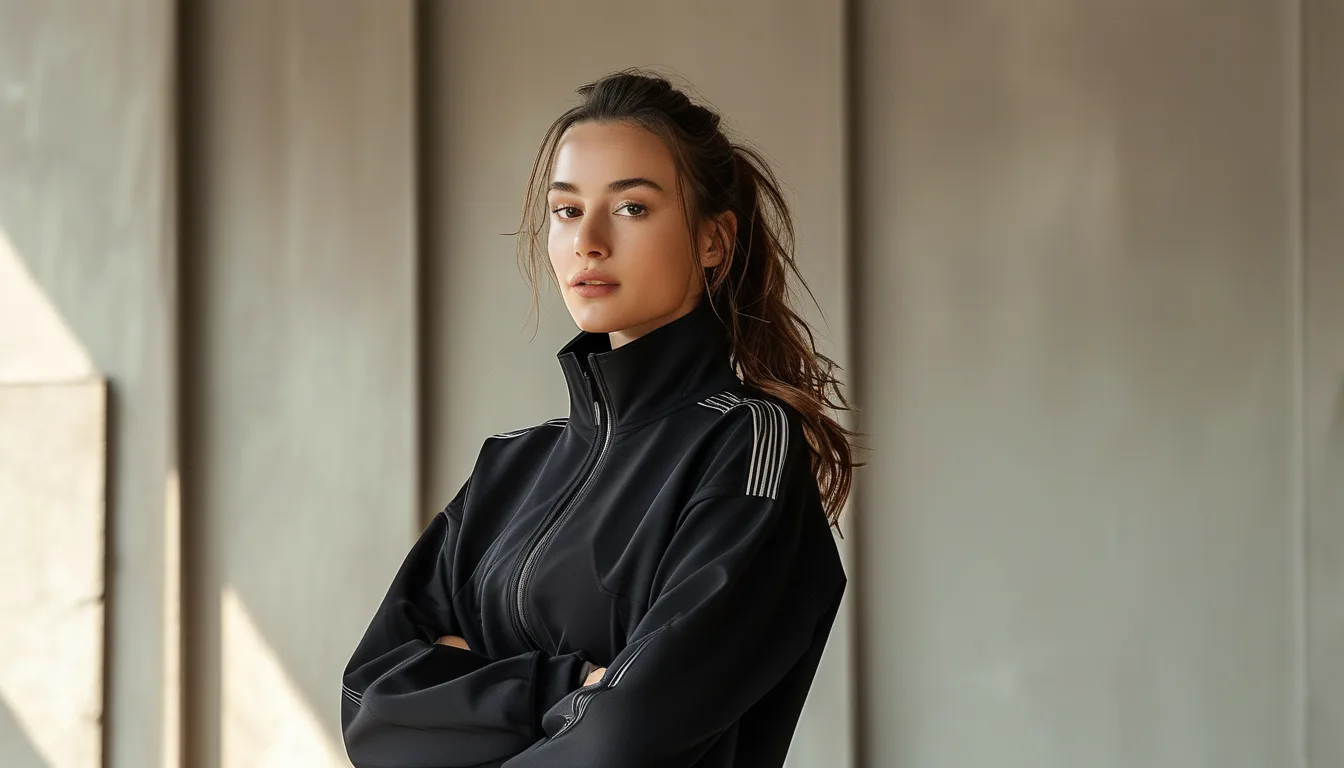
Your All-Black Outfit Has One Real Problem, and It Starts in September
Quick Answer: Black activewear is close to invisible to drivers in low light, and the fix is not a color change - it is contrast and motion. Reflective material placed on moving parts, particularly ankles and wrists, is recognized by drivers far earlier than reflective material on a static torso, because human motion patterns are what the eye actually picks up. Add one light source, put the reflective elements on your limbs, and keep the all-black look for daylight and the gym. From late August onward, evening runs start landing in real darkness.
You have spent months building a drawer where everything matches everything. Then the sun starts setting before your run finishes, and the single best feature of your wardrobe becomes its only genuine safety problem.
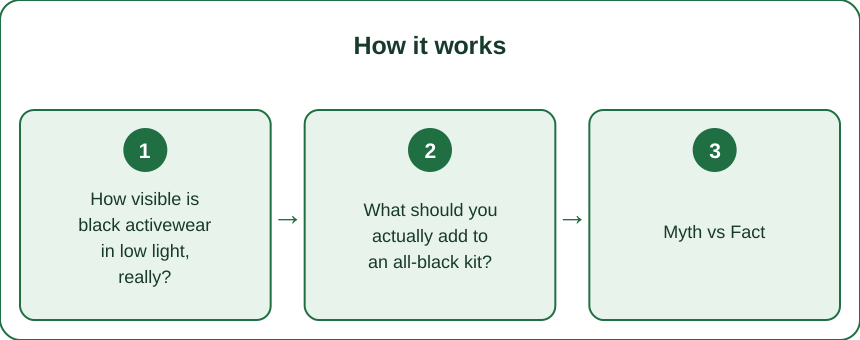
How visible is black activewear in low light, really?
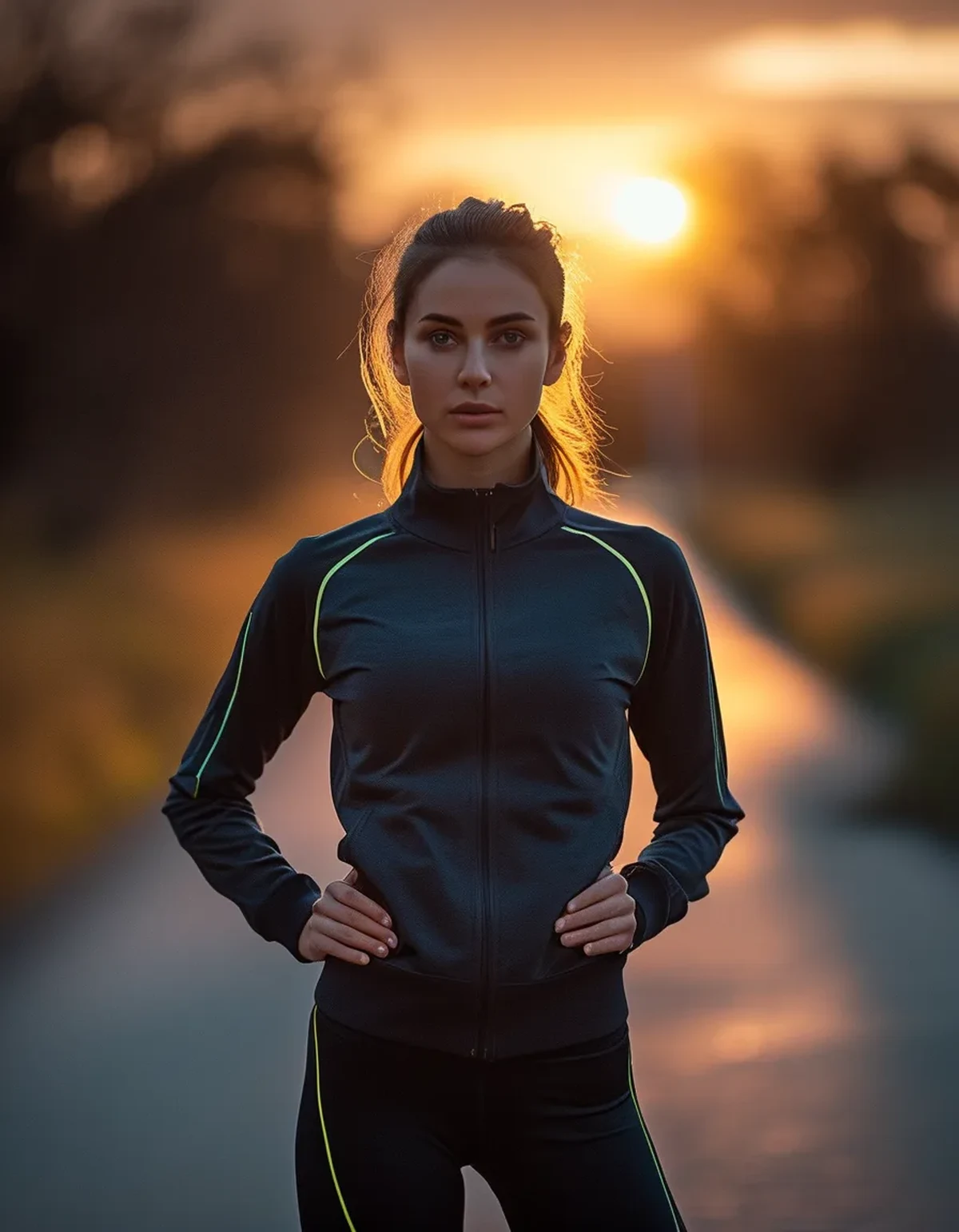
Much less visible than most runners assume, and the gap is largest at exactly the wrong time. Dusk is harder for drivers than full darkness in some ways: headlights are less effective while there is still ambient light, contrast is poor, and drivers have not yet mentally switched into night-driving mode. A runner in head-to-toe black at dusk on an unlit road can be genuinely difficult to pick out until quite close.
Fluorescent colors and reflective materials do different jobs. Fluorescent yellow, orange, and pink work in daylight and twilight, where there is ultraviolet light for them to convert - they are excellent at dusk and useless at midnight. Retroreflective material bounces headlight beams back toward the driver and works in the dark - it does very little at dusk before headlights are on. Most runners own one and assume it covers both situations.
Placement matters more than quantity. Research on driver perception has repeatedly found that reflective markings on moving joints - ankles, knees, wrists - are recognized as a person from much farther away than the same amount of reflective material on a vest. The reason is biological motion: the human visual system is extremely good at recognizing the specific movement pattern of a walking or running person, and lights on the limbs draw that pattern.
A single static reflective patch can even be misleading. A stationary point of light at the side of a road reads as a signpost or a reflector. Points of light that swing in a gait pattern read unmistakably as a person, and that recognition happens fast enough to change a driver’s behavior.
What should you actually add to an all-black kit?
Start with the ankles. A pair of reflective ankle bands, or shoes with genuine reflective panels, is the highest-value item you can add and it works with literally every outfit you own. This is the fix that requires no aesthetic compromise at all.
Add a light, not just reflection. Reflective material only works when a light is pointed at it, which means it does nothing for a cyclist without lights, a driver on a bend, or anyone approaching from an angle. A small clip-on LED - one rear-facing red, ideally - makes you visible independent of anyone else’s headlights. Blinking modes attract attention faster than steady.
Put something fluorescent on top for dusk runs. A cap, a light gilet, or a single bright layer. If most of your running happens in the hour around sunset rather than in full dark, this matters more than reflectivity does.
Use a headlamp on unlit paths. It serves two purposes: you see the ground, and oncoming traffic sees a light at head height that is obviously a person. On trails and unlit park paths, the ground-seeing part is the bigger safety issue - most autumn running injuries on paths are trip-related, not traffic-related.
Check what you already own. A lot of black activewear has reflective logos and seam details that are genuinely effective and that you have never noticed because you have never seen them in headlights. Have someone shine a phone light at you in a dark room and you will find out in ten seconds which of your pieces are already doing work.
And know what wears out. Reflective print degrades with washing and abrasion. If a favorite jacket is five years old and heavily washed, its reflective elements may be doing much less than they were - which is not obvious by daylight.
Myth vs Fact: Black Kit and Night Visibility
Myth: Drivers will see me because there are streetlights. Fact: Street lighting is designed to illuminate the road surface, not people at its edge, and a dark-clothed runner against a dark background under sodium or LED street lighting is a genuinely difficult target. Lit roads reduce the problem; they do not remove it.
Myth: A reflective vest is the complete solution. Fact: A vest is a static torso marker, and it is meaningfully outperformed by the same amount of reflective material placed on moving ankles and wrists, because moving markers trigger person recognition rather than object recognition.
Myth: Neon works at night. Fact: Fluorescent colors need ultraviolet light to fluoresce, so they perform brilliantly in daylight and twilight and poorly in true darkness. Reflective is the night material; fluorescent is the dusk material.
Myth: White clothing is nearly as good as reflective. Fact: White is better than black, and far worse than retroreflective material, which returns light directly toward its source and can be visible at many times the distance of ordinary light-colored fabric.
Myth: I run facing traffic, so I am fine. Fact: Running facing traffic is good practice on roads without pavements and it does not make you visible - it only means you can see the vehicle that cannot see you. The visibility problem is unchanged.
How do you keep the all-black look without the risk?
Split your wardrobe by time of day, not by season. All black stays exactly as it is for gym sessions, daytime runs, and studio classes. The dark-hours kit is a small subset - one jacket or gilet with real reflectivity, ankle bands, and a light - that lives by the door.
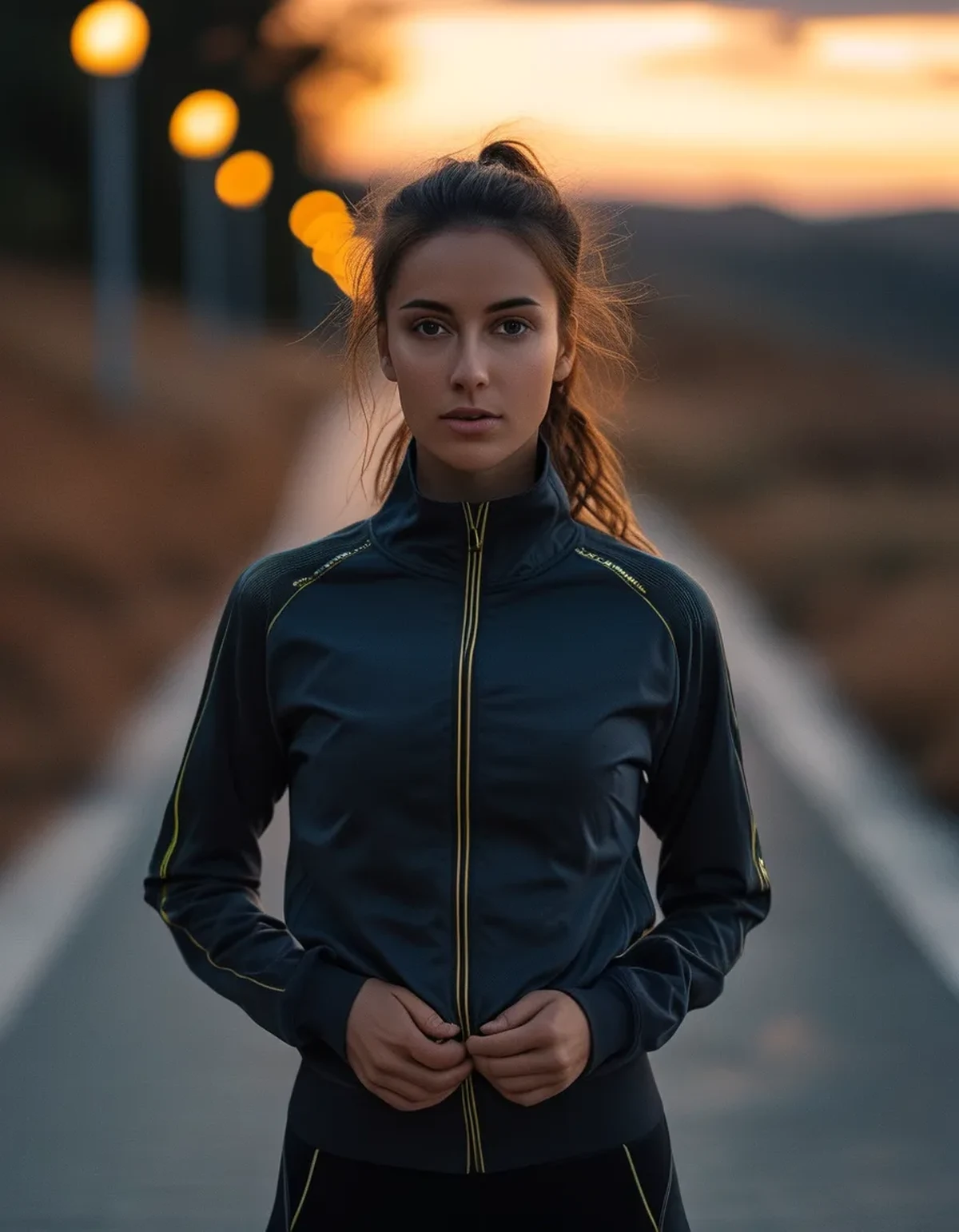
Choose reflective detailing over reflective panels. Modern black activewear frequently uses reflective piping, logos, and seam taping that is nearly invisible by day and lights up in headlights. This is the aesthetic-preserving option and it is worth seeking out specifically when you buy your autumn jacket.
Keep the bright piece small and specific. A fluorescent cap or a slim gilet over black is a much easier look to accept than a full head-to-toe neon kit, and for dusk runs it does most of the work.
Buy the autumn jacket now rather than in November. The seasonal transition is exactly when it becomes relevant, and the good reflective options sell through. This is also the moment your evening run stops finishing in daylight, usually a week or two before anyone consciously notices.
Move the run rather than solving the outfit, when you can. Morning light lasts longer into the autumn than evening light does, and a lunchtime run in October is a genuinely different experience from a 6 pm one. Not always possible - but it is the one solution with no equipment cost.
And treat this as gear, not fashion. Nobody looks at the ankle bands. Every driver’s peripheral vision does.
FAQ: Black Activewear and Visibility, Answered
Is it dangerous to run in all black at night?
It meaningfully reduces how early drivers can see you, particularly on unlit roads and at dusk. The practical fix is adding retroreflective material on moving limbs plus an active light source, rather than replacing your wardrobe with bright colors.
Where should reflective material go for maximum effect?
On moving joints - ankles first, then wrists and knees. Reflective markers that move in a gait pattern are recognized as a person from considerably farther away than the same material on a static vest.
Do fluorescent colors help at night?
Not much in true darkness - fluorescent materials need ultraviolet light, so they excel in daylight and twilight. Use fluorescent for dusk and dawn runs and retroreflective material plus a light for the dark.
Does reflective material wear out?
Yes. Reflective prints and tapes degrade with repeated washing and abrasion, and an old, heavily laundered jacket may reflect far less than it did new. Test yours by having someone shine a light at you in a dark room.
TL;DR:
- Black activewear is close to invisible to drivers in low light, and the problem arrives quietly as evening runs start finishing after sunset.
- Reflective material on moving ankles and wrists is recognized as a person far earlier than the same material on a static vest.
- Fluorescent works at dusk, retroreflective works in the dark, and an active light source works when nobody’s headlights are pointed at you.
- Keep the all-black look for daylight and the gym; build one small dark-hours kit - reflective jacket, ankle bands, clip light - that lives by the door.
- Check the reflective details on gear you already own, and remember that reflective print degrades with washing.
The outfit is not the problem. The hour is. Keep the wardrobe you love and add the three items that make a driver see a person instead of a shadow.
Keep Reading
This article is for general informational and styling purposes only. Fit, sizing, and product availability may vary.