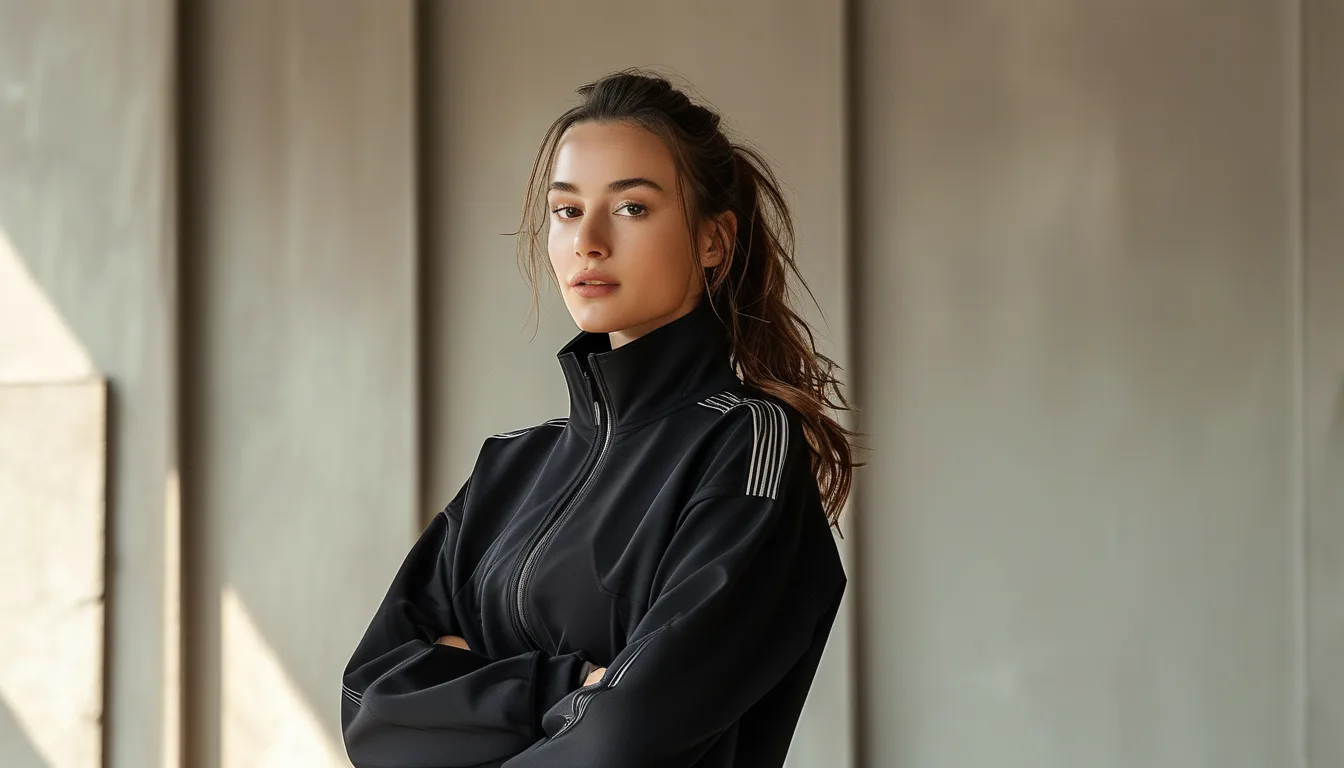
Why Your All-Black Set Looks Great in Summer and Flat in October
Quick Answer: Black reads as depth and shape rather than as color, so it depends almost entirely on light to look good. Summer’s high, hard sunlight creates strong highlights that reveal texture and contour; autumn’s low, diffuse overcast light flattens all of it, and the same outfit reads as a solid dark shape. The fix is adding texture and structure rather than adding color - a ribbed knit, a matte-against-shine contrast, or a defined waist restores the dimension the light stopped providing.
The set that looked sharp in August photographs like a silhouette in October.
You did not stop styling it well. You lost your key light.
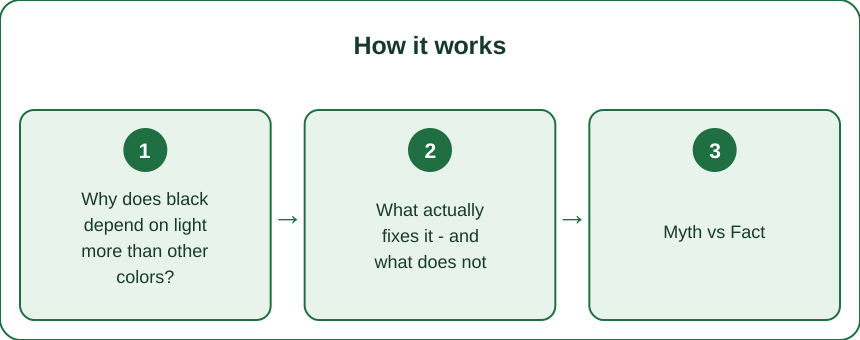
Why does black depend on light more than other colors?
Because black has no hue information to carry the look - it works entirely through highlight and shadow.
A navy or olive garment reads as itself even in flat light, because the color is doing the identifying work. Black absorbs most of the light hitting it, so what you actually perceive is the small amount that reflects off the surface - and that reflection is what tells you about texture, drape, and shape.
High summer sun is directional and intense. It creates a clear highlight along the top of every curve and fold, and your eye reconstructs the three-dimensional form from those highlights.
Overcast autumn light is diffuse and arrives from everywhere at once. There is no directional highlight, so there are no edges, so a black outfit collapses visually into one flat shape. The garment is identical. The information reaching your eye is not.
What actually fixes it - and what does not
Adding a color does not fix it. It changes the outfit into a different outfit. If you want to keep wearing all black, the variable to adjust is surface.
Things that restore dimension in flat light:
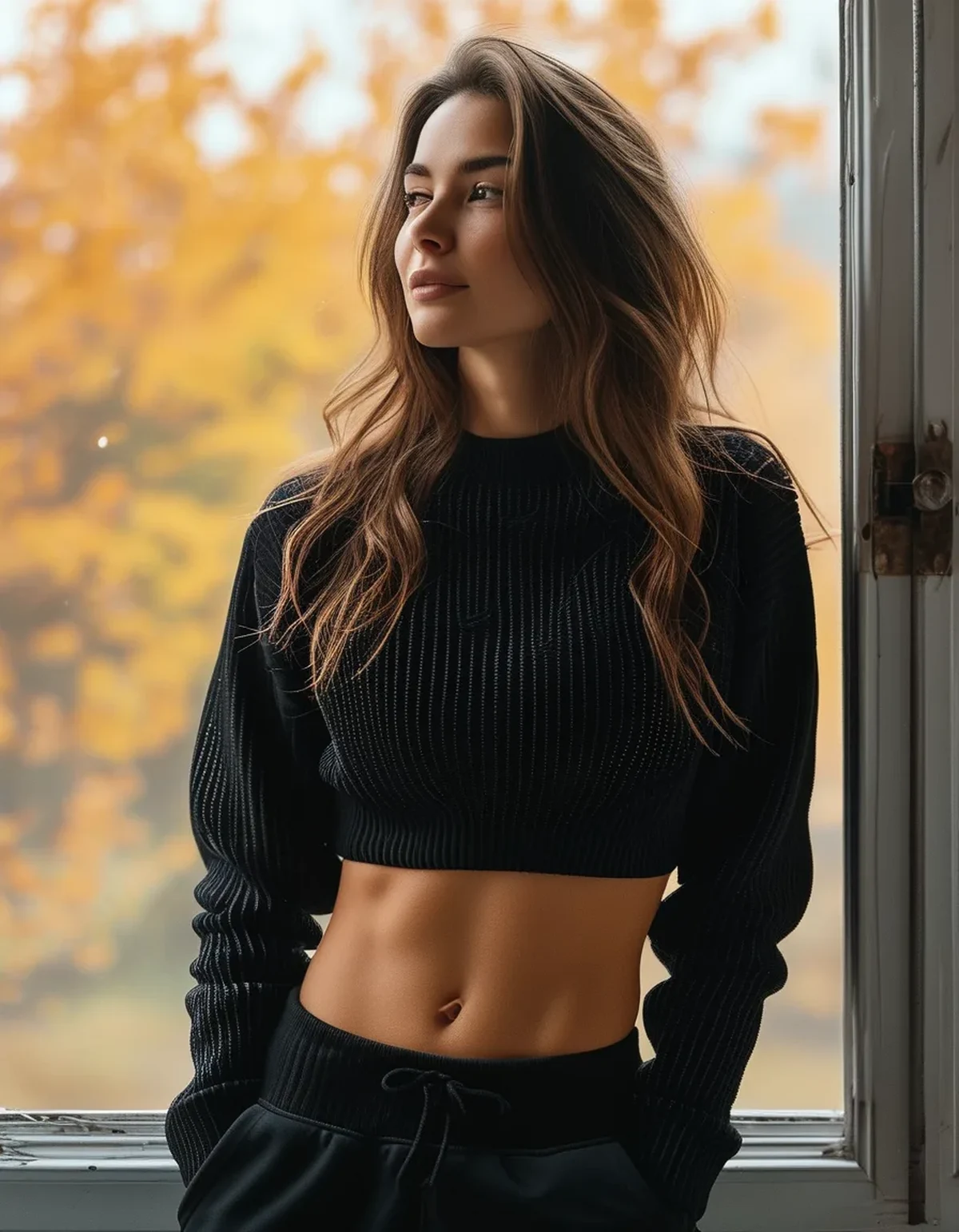
- Texture contrast. A ribbed or cable knit against smooth technical fabric. Ribbing creates its own miniature highlights and shadows regardless of the light source, which is exactly what the weather stopped supplying.
- Finish contrast. Matte against a subtle sheen. A matte cotton top with a slightly glossy legging reads as two distinct pieces even in overcast light; two matte pieces merge.
- Structure. A defined waist, a cropped hem, a visible cuff. Structural edges do the job that highlight edges used to.
- A single hardware accent. A metal zip pull or a belt catches what little directional light exists.
One of these is usually enough. Two is a styled outfit. Three starts to look effortful.
Myth vs Fact: All-Black in Autumn
Myth: Your blacks have faded and that is why they look flat. Fact: Sometimes true, but it presents differently - fading shows as a brownish or greyish cast in direct light, and it is visible when you hold two garments side by side. Seasonal flatness affects every black piece you own simultaneously, including brand new ones. If everything looks flat at once, it is the light.
Myth: Blacks from different brands never match, so mixing is a mistake. Fact: They rarely match precisely, and in autumn light that mismatch is far less visible than in summer, because the diffuse light suppresses the subtle undertone differences. Autumn is genuinely the easier season for mixing blacks.
Myth: You need to switch to color for fall. Fact: You need texture, not hue. The all-black wardrobe works year-round; it just needs different surface variety in the second half of the year.
Myth: Black is slimming in all conditions. Fact: Black minimizes visible contour, which reads as slimming in strong light where shape is still legible. In flat light it can read as a single broad shape instead, which is the opposite of the intended effect. Structure is what preserves it.
How do you photograph all-black in October?
If your all-black outfits are for photos as much as for wearing, the fix is mostly about finding directional light.
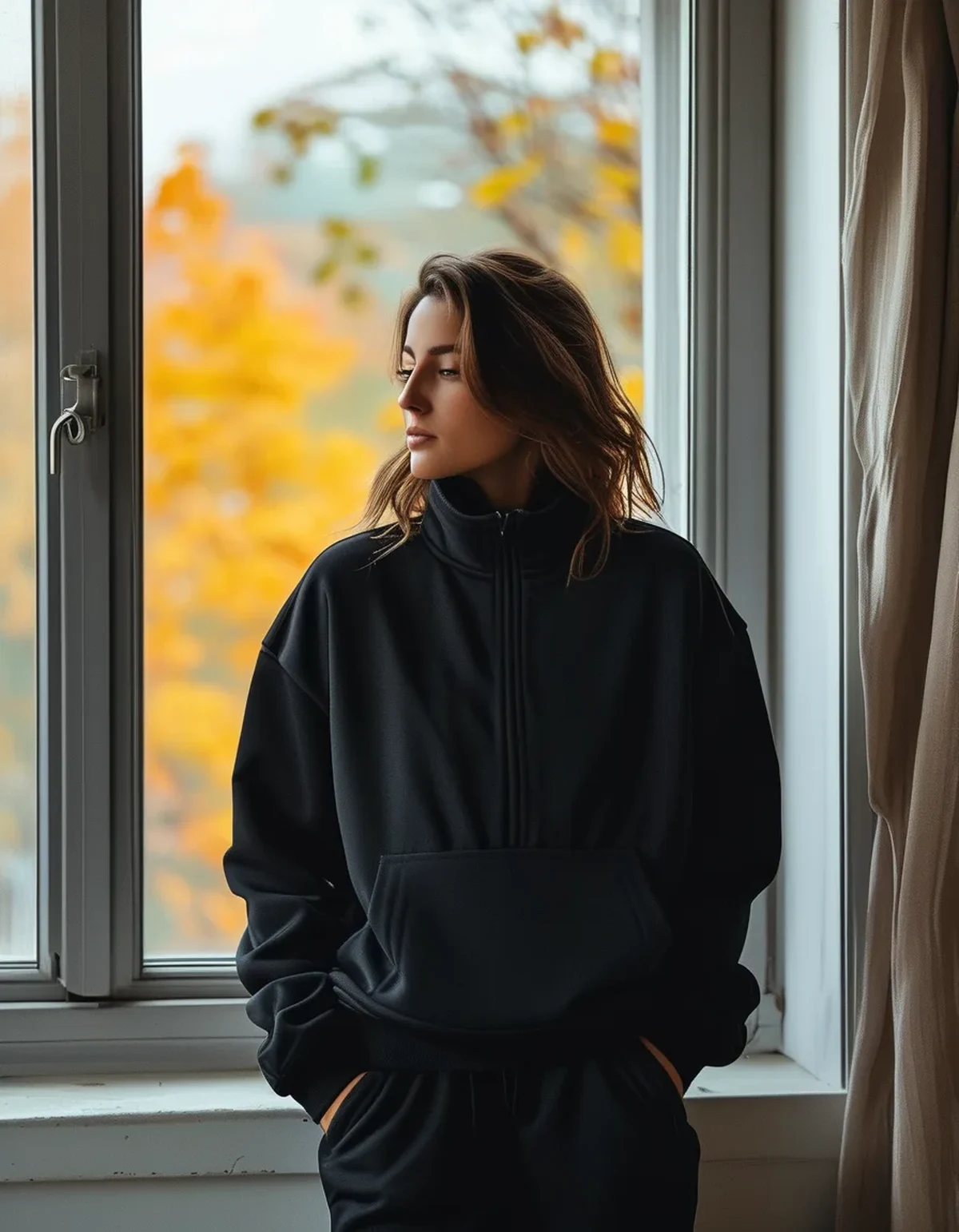
- Stand near a window, not in the middle of the room. A window is a directional source even on a grey day, and it restores the highlight that overcast sky removed.
- Turn slightly away from the light source, so it rakes across the fabric rather than hitting it flat on. Raking light is what reveals texture.
- Put something lighter behind you. A pale wall separates the silhouette from the background; a dark background merges with it.
- Avoid overhead indoor lighting. It lands on shoulders and the top of the head, leaving the rest of the outfit in undifferentiated shadow.
The same principles apply to how the outfit reads in person - if it looks flat in your hallway mirror, walk to a window before deciding the outfit is the problem.
FAQ: All-Black Wardrobe Questions, Answered
How do I stop my blacks from actually fading?
Wash cold, inside out, on a shorter cycle, and skip the dryer where you can - heat is the main culprit for both fading and elastane breakdown. Detergents formulated for dark colors help modestly. The largest single factor is dryer heat.
Is it worth replacing older black pieces that have gone slightly grey?
Only if you wear them next to newer black pieces, where the difference becomes visible. Worn alone, a slightly faded black reads as black to nearly everyone. Demote the older ones to standalone pieces rather than discarding them.
Does this apply to all-white outfits too?
The opposite problem, actually. White depends on shadow rather than highlight to show shape, so it tends to look flat in bright light and holds dimension better in soft overcast conditions. Same principle, reversed direction.
TL;DR:
- Black works through highlight and shadow, not hue - so it depends on directional light more than any other color.
- Autumn’s diffuse overcast light removes those highlights, and the outfit collapses into a flat shape.
- Fix it with texture, finish contrast, and structure - not by adding color.
- Ribbed knit against smooth technical fabric is the single most reliable combination.
- Mixing blacks from different brands is genuinely easier in autumn, because flat light hides undertone mismatch.
- If everything black looks flat at once, it is the season. If one piece looks off next to another, that is fading.
The all-black wardrobe does not need a seasonal replacement. It needs surface variety to do the job that summer sunlight was doing for free.
Keep Reading
This article is for general informational and styling purposes only. Fit, sizing, and product availability may vary.