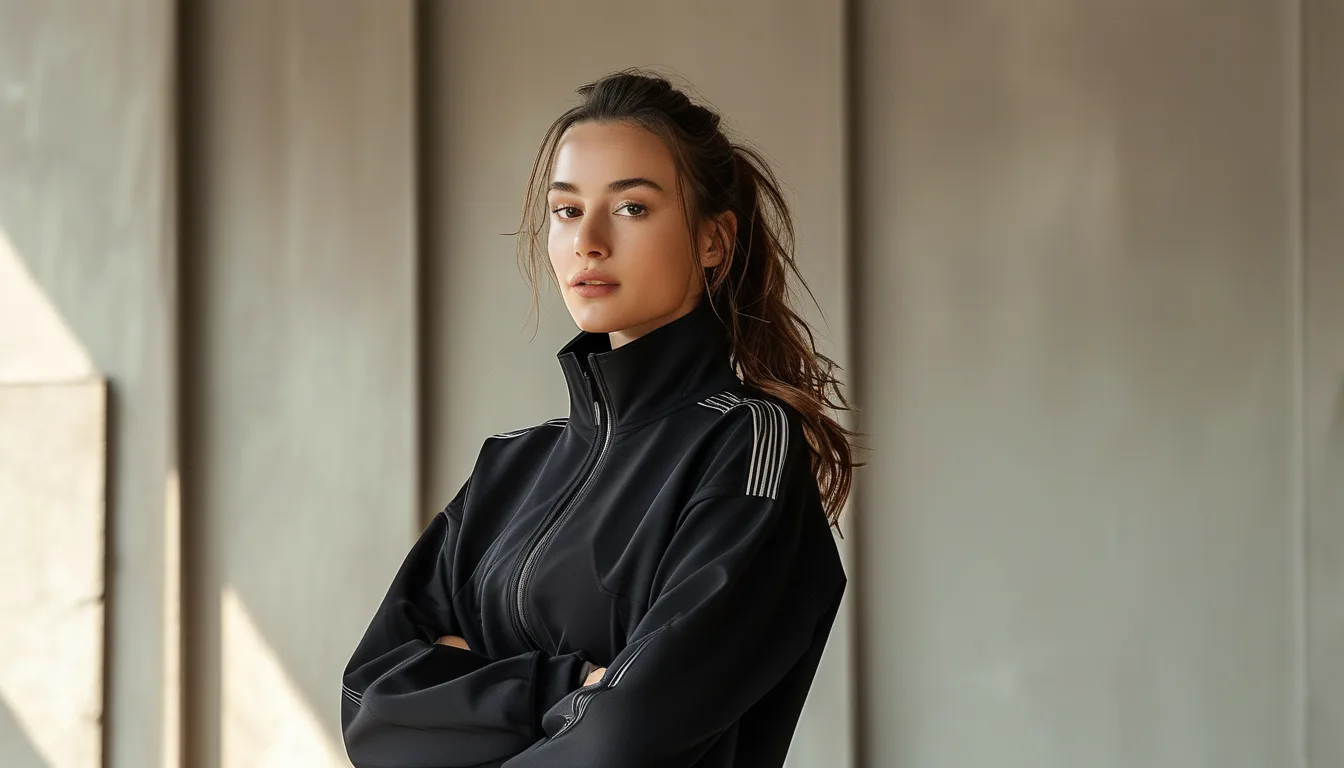
Why Your All-Black Gym Outfit Looks Flat in Photos — and the Texture Fix
Quick Answer: All-black outfits photograph flat because cameras compress dark tones into one narrow band of shadow, erasing the seams and edges your eye picks up in person. Fix it with texture contrast instead of color contrast: pair one matte surface with one that catches light — ribbed with smooth, cotton with nylon-spandex, a soft crop with a sculpting legging. Then add side light, not front light, and leave a little separation between your arms and torso so the silhouette has an outline.
You check the mirror before you leave and the fit looks great. Then you see the photo and it is a person-shaped shadow.
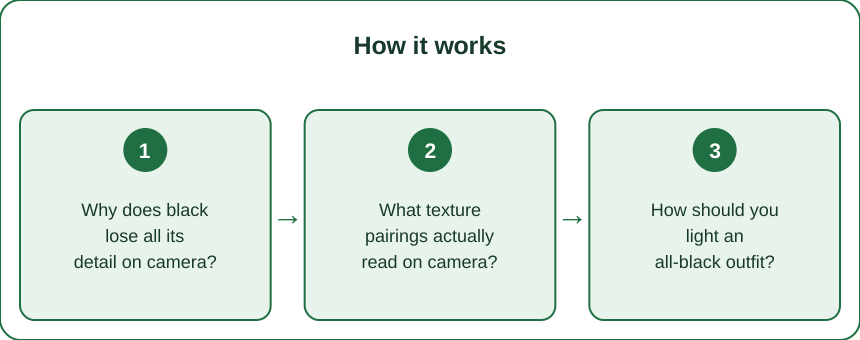
Why does black lose all its detail on camera?
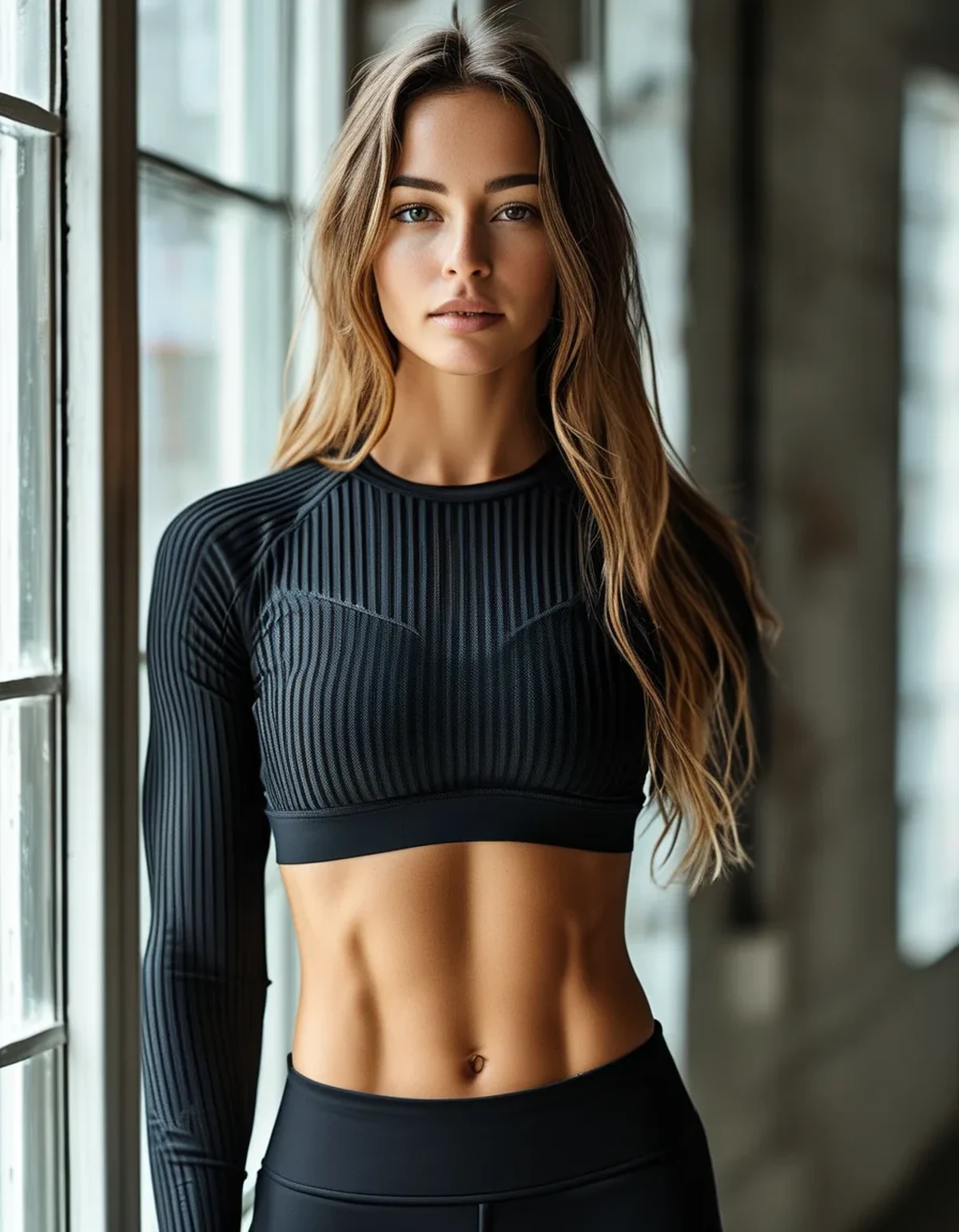
Because your eye has far more dynamic range than a phone sensor. Standing in the room, you register dozens of subtle shifts between the crop top’s ribbing and the legging’s smooth panel. The camera collapses that entire range into a handful of near-identical dark values.
Auto-exposure makes it worse. When a large black area fills the frame, the phone brightens the whole scene to compensate, which washes out the background and flattens the outfit at the same time. You get a grey-ish black with no depth.
The seams, waistband, and hemline — the details that define shape — are exactly the fine-contrast information that disappears first when a sensor is guessing.
This is why the fix is not lighting alone. You can throw plenty of light at an all-matte black outfit and still get a blob, because there is nothing in the fabric to reflect that light differently from one surface to the next.
What texture pairings actually read on camera?
The rule is one surface that absorbs light and one that returns it.
Ribbed with smooth. A ribbed top has physical grooves that create tiny highlight-and-shadow lines. Against a flat compression legging, those grooves are the only place the light lands, and that reads instantly as two separate pieces.
Matte with sheen. A cotton-blend hoodie next to a nylon-spandex legging is the highest-contrast pairing you can build without leaving black. The nylon has a low sheen that photographs as a soft highlight down the leg.
Scrunch or seam detail with plain. A seamed legging carries its own shadow map. Pair it with a completely plain top so the seams have somewhere to stand out against.
Different weights. A heavier fleece over a thin second-skin layer creates a visible edge where the two meet, and the edge is what your camera needs.
What does not work: two matte cotton pieces, or two identical compression pieces from the same set. Same fabric, same finish, one silhouette.
How should you light an all-black outfit?
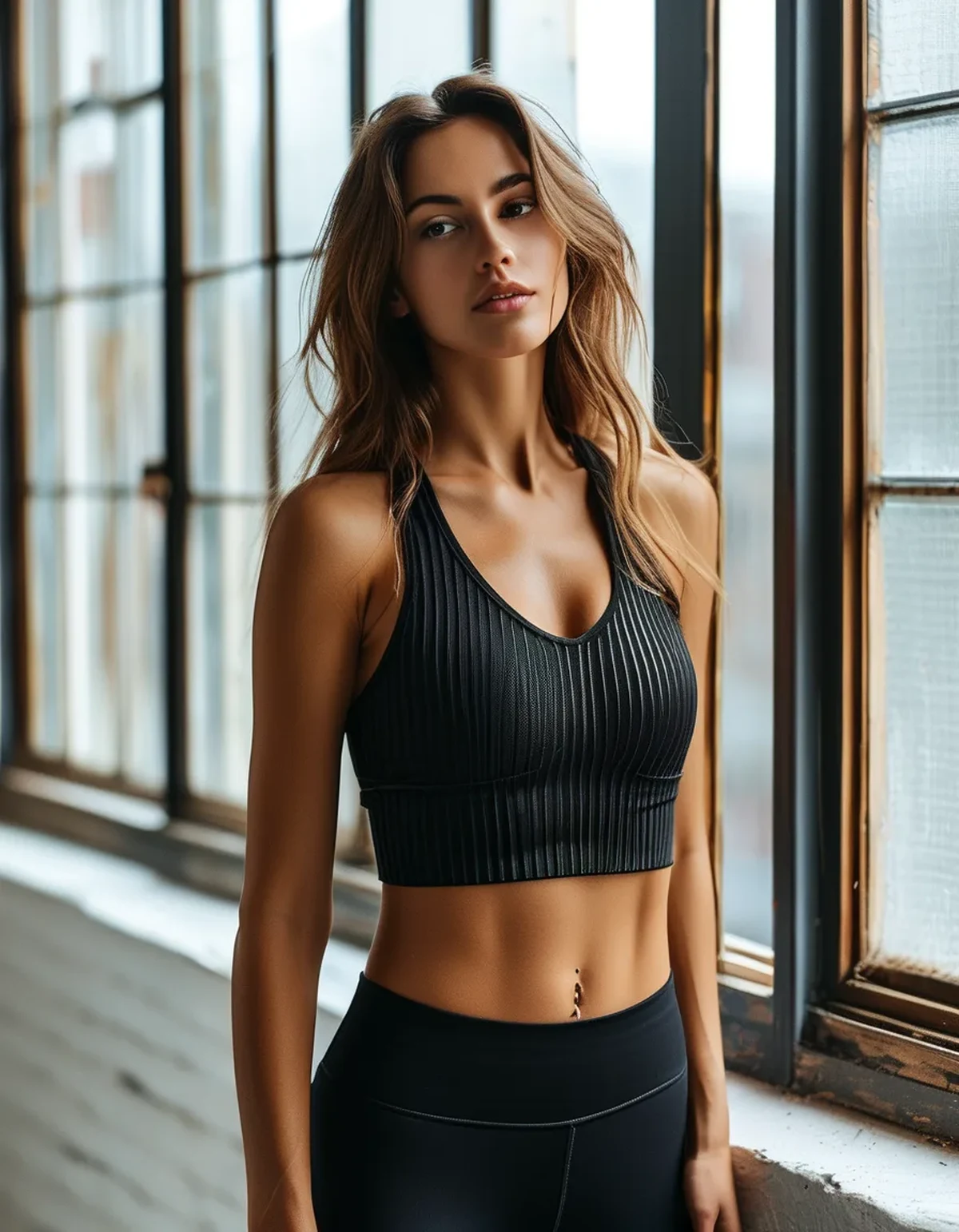
Side light beats front light, every time. Light coming from roughly 45 degrees to one side rakes across the fabric surface and reveals its texture. Light coming straight at you flattens everything it touches.
In practice that means standing with a window to your side, not behind the phone. If you are in a gym, position yourself so overhead lights fall across you rather than directly down — a half step is often the whole adjustment.
Background matters more than usual. Black against a dark gym wall has nowhere to end. Against a light wall, a mirror, or a bright doorway, your silhouette gets an actual outline, and outline is what makes a dark outfit read as a shape rather than a smudge.
One small technical move: tap to focus on your face, then drag the exposure slider down slightly. Underexposing by a touch keeps black looking like black instead of muddy grey, and it protects the highlights on any sheen you built in.
Avoid direct overhead sun at midday. It creates hard shadows under the bust and hem that make even a well-fitted set look bunched.
5 Mistakes Everyone Makes With All-Black Fits
1. Matching the set exactly. A top and legging from the same collection in the same fabric are the fastest route to a blob. Break the set on purpose — that is the entire trick.
2. Shooting against a dark background. Dark on dark removes your outline. Move three feet toward the bright wall.
3. Arms pressed to the sides. With no color separation, your arms merge into your torso and the silhouette gets wider. Leave a visible gap — hand on hip, arm slightly out.
4. Relying on a filter to fix it afterward. Raising the shadows in editing does not create detail that the sensor never captured; it just makes the black look grey and noisy. The information has to exist in the fabric first.
5. Ignoring the hardware. A zip pull, a drawcord, a light-colored shoe, a metallic water bottle. One small non-black element gives the eye a reference point, and it costs you nothing in the all-black look you actually wanted.
FAQ: All-Black Activewear Questions, Answered
Does black actually make you look slimmer in photos?
It narrows the silhouette, yes — but only if the silhouette is visible. Against a dark background with front lighting, black widens you by merging your outline with the shadows. Contrast does the slimming work, not the color.
Why does my black legging photograph brown or purple?
Mixed light sources. Warm indoor bulbs plus daylight from a window push black toward brown, and gym LEDs can push it blue-purple. Shoot near one dominant light source, or tap the white balance if your camera app allows it.
Do faded black pieces still work in an all-black outfit?
They can, deliberately — a slightly faded piece next to a true black reads as intentional tonal layering. What does not work is two pieces faded to slightly different degrees, which just looks like laundry mishap.
Is there a fabric that photographs best in black?
Ribbed knits and anything with a low sheen from nylon content. Pure matte cotton is the hardest to shoot and the easiest to wear, which is why it belongs in the outfit but rarely as the only fabric.
TL;DR:
- Cameras compress dark tones into one value, so all-black loses the seams and edges your eye sees in person.
- Fix it with texture contrast: ribbed with smooth, matte with sheen, seamed with plain.
- Use side light, stand against a lighter background, and underexpose slightly to keep black looking rich.
- Leave a gap between arms and torso so the silhouette has an outline.
- One small non-black detail — a shoe, a zip pull — gives the eye somewhere to land.
All-black is not the problem. Wearing one uninterrupted surface is. Once you start thinking of black as several different materials instead of one color, the photos start matching the mirror.
See It in Motion
Seen here: Super High Waist Embossed Yoga Leggings with Inner Pocket — shop it on bubblelime.com
Keep Reading
This article is for general informational and styling purposes only. Fit, sizing, and product availability may vary.