How to Stop Black Activewear From Fading to Grey
Quick Answer: Black activewear fades from heat, friction, detergent residue, and UV exposure - in that order of impact. Wash cold, inside out, on a gentle cycle with a small amount of liquid detergent and no fabric softener, then air dry away from direct sun. Those four changes will preserve black far longer than any colour-restoring product will recover it.
An all-black wardrobe only works while the blacks match. Here’s what’s actually turning them grey, and what to do about each cause.
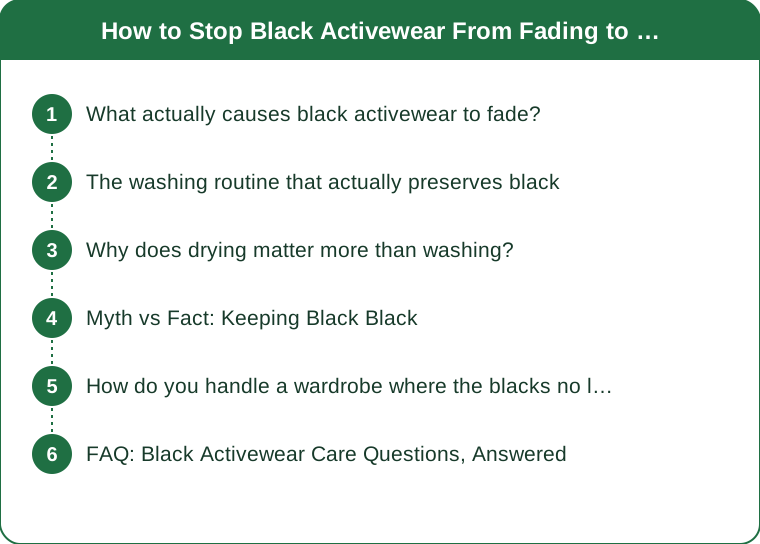
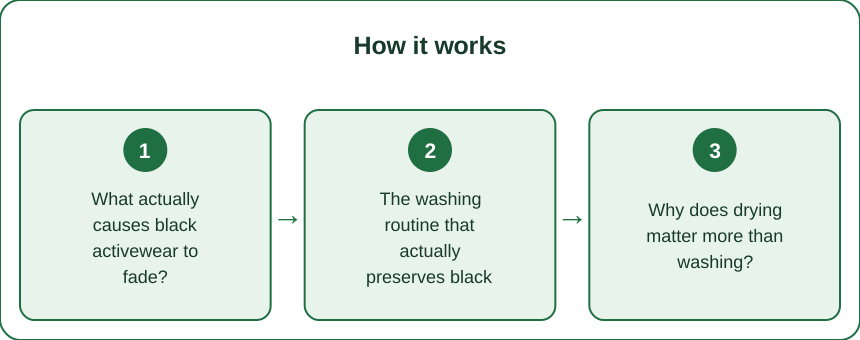
What actually causes black activewear to fade?
Four mechanisms, and they act on different parts of the garment.
Heat. Hot water and tumble drying are the biggest single accelerant. Heat opens synthetic fibres and helps dye migrate out, and it simultaneously degrades the elastane that gives the garment its shape. Fading and losing stretch are usually the same problem with the same cause.
Friction. Every wash cycle abrades the fabric surface. Abrasion lifts tiny fibres, which scatter light and read as greyness even when the dye underneath is intact. This is why the inner thighs and the seat fade first - they’re the highest-friction zones in wear as well as in the machine.
Detergent residue. Too much detergent doesn’t rinse fully out of technical fabrics, leaving a dulling film. Fabric softener is worse - it coats synthetic fibres deliberately, which reduces wicking and creates a permanent haze on dark colours.
UV exposure. Sunlight breaks down dye molecules directly. Drying black leggings on a sunny line is efficient and it is also the fastest fade you can achieve on purpose.
The washing routine that actually preserves black
Six steps, none of which take extra time once they’re habit.
1. Turn everything inside out. The outer surface is the one you see; the inner surface takes the abrasion instead. This single change makes a visible difference over a season.
2. Wash cold - 30C or below. Cold water cleans activewear perfectly well because the soils involved are mostly body oils and sweat, not baked-on grease.
3. Use liquid detergent, and less of it. Powder can leave residue on synthetics. Use roughly half the recommended dose for a normal load - technical fabrics need far less than cotton.
4. Skip fabric softener entirely. No exceptions on activewear. It coats fibres, dulls colour, kills wicking, and traps odour-causing bacteria.
5. Wash blacks together, and with like fabrics. Zips, hooks, and rough cotton towels are the main sources of abrasion damage. A load of blacks and technical fabrics only is gentler than a mixed load.
6. Use a gentle or delicate cycle. Less agitation, less friction, less surface fuzz.
Why does drying matter more than washing?
Because the dryer combines every fading mechanism at once.
A tumble dryer applies heat, mechanical friction, and time simultaneously. It is the single most damaging thing that happens to a pair of black leggings on a routine basis - worse than the wash, and worse than the workout.
Air dry instead, and specifically:
- Indoors or in shade, never in direct sunlight
- Flat or over a wide rail, not clipped by the waistband, which stretches it
- Inside out, for the same reason as washing
Air drying activewear is fast - most technical fabrics dry in a few hours because they’re designed to move moisture - so the usual objection doesn’t really apply.
If you must tumble dry, use the lowest heat setting available and pull the garment while it’s still slightly damp. The last ten minutes of a dryer cycle, when the fabric is dry and still tumbling in heat, does a disproportionate share of the damage.

Myth vs Fact: Keeping Black Black
Myth: Adding vinegar or salt to the wash sets the dye. Fact: This applies to some natural-fibre dyeing processes, not to commercially dyed synthetics. Vinegar is genuinely useful for stripping detergent residue and odour, which can make a garment look slightly better - but it isn’t setting any dye.
Myth: Black-restoring detergents restore black. Fact: Most work by depositing a small amount of dye or optical agent on the surface. The effect is temporary and washes out. They can help visually for an event; they don’t reverse fibre damage.
Myth: Expensive black activewear doesn’t fade. Fact: Dye quality and fabric construction do vary, but the laundry variables dominate. Cheap black washed correctly outlasts expensive black tumble dried hot.
Myth: Washing less often preserves colour. Fact: Sweat is acidic and salty and degrades both fibre and dye if left sitting. Wash after each wear - just wash gently. Leaving damp activewear in a bag is far worse than an extra cold cycle.
Myth: Fading means the garment is finished. Fact: Fading is cosmetic. What determines whether a piece is finished is waistband recovery and fabric opacity. A faded but structurally sound legging is still functional - it just doesn’t match your other blacks.
How do you handle a wardrobe where the blacks no longer match?
Because eventually they won’t, no matter how careful the routine.
Sort into tiers rather than trying to fix it. Group your blacks by shade - true black, softened black, genuinely grey. Wear within a tier. Mismatched blacks in the same outfit are far more visible than either shade alone, and in photographs the difference is exaggerated.
Assign the faded tier a purpose. Outdoor training, layering under other pieces, or as a base layer where only a cuff shows. This is different from a vague second tier that quietly grows - give it a defined use and a piece count.
Buy replacements from the same brand and line when you can. Black is not a standard colour; it varies noticeably between brands and even between fabric weights within one brand. Matching within a line is easier than matching across.
Consider dyeing only for natural fibres. Home dyeing works reasonably on cotton and poorly on the polyester and nylon blends most activewear uses - synthetic fibres need heat and conditions a home machine can’t provide, and the elastane won’t survive the attempt.
And accept a replacement cycle. Even with a perfect routine, high-use black activewear looks its best for roughly a year of regular wear. Planning for that is cheaper than chasing it.
FAQ: Black Activewear Care Questions, Answered
Does washing in a mesh bag help?
Yes, meaningfully. It reduces abrasion against other garments and protects against snags from zips and hooks.
Can I use oxygen bleach on black activewear?
No. Any bleach product, including colour-safe versions, will accelerate fading on dark synthetics.
How do I get rid of the smell without softener?
Soak in cold water with a cup of white vinegar for 30 minutes, then wash cold with a sports detergent. Fabric softener is usually the cause rather than the solution.
Is handwashing better?
Gentler, yes, but a cold delicate cycle in a mesh bag is close enough for most garments and far more sustainable as a habit.
TL;DR:
- Heat, friction, detergent residue, and UV cause fading - in that order
- Wash cold, inside out, gentle cycle, half the usual liquid detergent, no softener ever
- Air dry in shade; the tumble dryer combines every fading mechanism at once
- Colour-restoring products are cosmetic and temporary
- Sort faded blacks into tiers and give the faded tier a defined job
Black doesn’t fade because it’s black. It fades because of the dryer.
See It in Motion
Seen here: High Waist Yoga Leggings with Side Pockets — shop it on bubblelime.com
Keep Reading
This article is for general informational and styling purposes only. Fit, sizing, and product availability may vary.