Keeping Black Clothes Actually Black: The Fade-Proof Wash Routine
Quick Answer: Black clothes fade through three separate mechanisms - dye escaping in hot water, fibers physically abrading against other laundry, and detergent or mineral residue coating the surface gray. The routine that stops all three: wash blacks together, inside out, in cold water on a gentle cycle, with about half the usual dose of liquid detergent, and keep them away from the dryer and direct sun. Do that, and black stays black for years instead of a season.
An all-black wardrobe is supposed to be the low-maintenance choice. Then six months in, half the closet is charcoal, one shirt has gone vaguely green, and nothing matches anything - in a wardrobe with exactly one color.
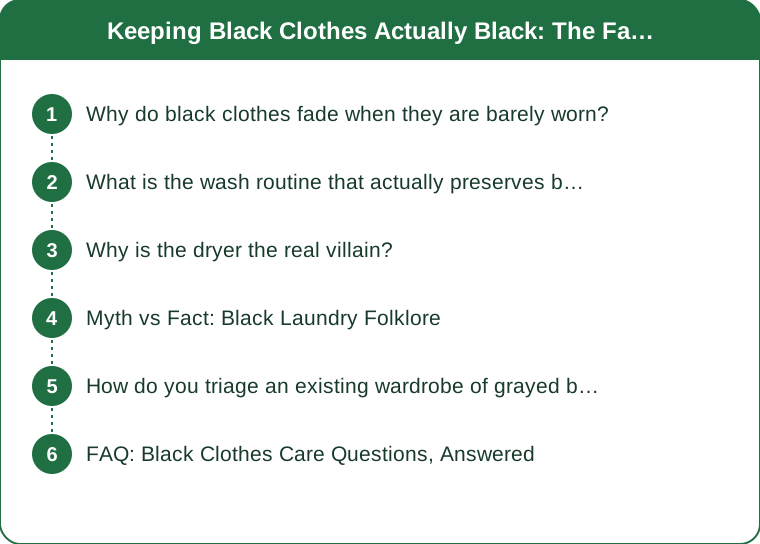
Why do black clothes fade when they are barely worn?
Because most fading happens in the laundry, not in the world, through three distinct mechanisms - and each has its own fix, which is why single-trick advice disappoints.
Mechanism 1: dye loss. Black dyes sit in and on fibers, and hot water opens fibers and flushes dye out a little with every wash. Black is also usually the deepest, heaviest dye load a garment carries, so it has the most to lose and shows loss soonest.
Mechanism 2: physical abrasion. Inside a drum, clothes scrub against each other for an hour. That friction breaks and frays microscopic fiber ends, and those broken ends scatter light - which reads to your eye as gray haze even when plenty of dye remains. Denim hardware, zips, and velcro in the same load are sandpaper. This is also where pilling on black knits and black leggings comes from, and pilled fabric always looks lighter than it is.
Mechanism 3: residue coating. Too much detergent, fabric softener, and hard-water minerals leave a film that dulls the surface like a fingerprinted phone screen. This one masquerades as fading but is actually a removable layer - which is why some faded blacks can be partially revived.
The green or orange tint some blacks develop is its own story: many black dyes are built from mixed dye components, and they fade at different rates. When the blue-heavy components quit first, the leftovers read greenish or rusty - most common in cheap dye jobs and sun-exposed pieces.
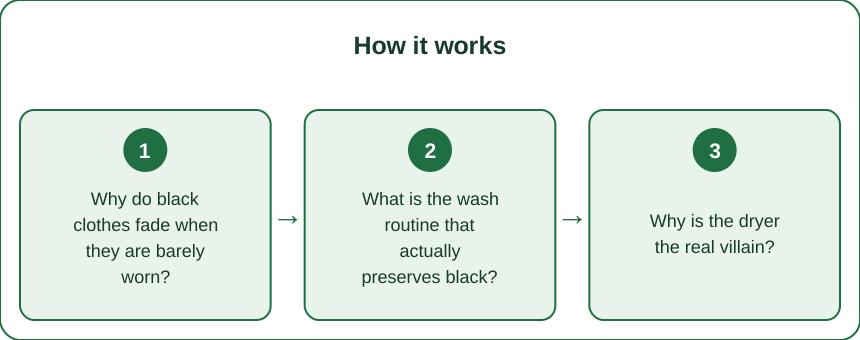
What is the wash routine that actually preserves black?
Seven habits, none of which add real effort once they are defaults:
Wash blacks with blacks. A darks-only load prevents lint transfer from light fabrics - pale fuzz on black is instant visual fading - and lets you run the gentler settings blacks want without compromising for whites.
Inside out, every time. Abrasion is inevitable; this simply spends it on the side nobody sees. The single highest-return habit on this list.
Cold water, full stop. Cold keeps fibers closed and dye in place, and modern liquid detergents are formulated to clean properly in it. Hot water is for sheets and towels, not for anything you want to stay saturated.
Gentle or short cycle. Less drum time is less friction. Most lightly worn clothes are not actually dirty - a 30-minute cycle cleans them completely.
Half-dose liquid detergent. Powder can leave visible residue on dark fabric; liquid rinses cleaner. And most people dose for heavy soil out of habit - excess detergent does not clean more, it just coats.
Skip fabric softener on blacks. It builds exactly the dulling film you are trying to avoid, and on black activewear it also clogs the moisture-wicking finish.
Zip the zips, close the velcro. Sixty seconds of closing fastenings removes the sandpaper from the load.
Add one scheduling habit: wash blacks less often overall. A worn-once black sweater aired overnight is clean. Every skipped cycle is a skipped dose of all three fading mechanisms.
Why is the dryer the real villain?
Because heat and tumbling deliver mechanisms one and two at their maximum intensity, after the wash already took its toll.
Heat accelerates dye breakdown and cooks residue onto fibers. Tumbling is an hour of dry-on-dry friction - noticeably harsher than wet friction, which is why the lint trap fills up. That lint is your clothes, leaving. On black elastane blends - leggings, fitted tees, anything with stretch - heat also degrades the stretch fibers themselves, so the garment fades and bags in the same season.
The air-dry rules for black:
- Out of direct sunlight, always. UV is the strongest fade force there is - it bleaches dye within days of cumulative exposure. A sunny drying line does to a black tee in a summer what a year of washing does. Shade, indoors, or an overnight line.
- Inside out even for drying, if any light exposure is possible.
- Flat-dry knits and heavy pieces so wet weight does not stretch them.
If the dryer is unavoidable - climate, space, life - use low heat only, pull pieces out slightly damp to finish on hangers, and accept that black basics on a dryer routine are consumables on roughly a one-to-two-year clock. That can be a legitimate choice; the point is knowing the trade.
One underrated bonus: air-dried blacks also skip the static that makes dark fabric a lint magnet, which is half the daily battle of wearing black in a house with anything pale, fluffy, or four-legged.

Myth vs Fact: Black Laundry Folklore
Myth: Adding vinegar to every wash locks in dye. Fact: Vinegar does not fix dye in modern fabrics - that chemistry happened at the factory. What a half-cup of white vinegar in the rinse genuinely does is dissolve detergent and mineral residue, which can visibly de-gray a coated black. Useful occasionally as a residue treatment, not a dye sealer.
Myth: Salt in the wash keeps blacks black. Fact: Same story - salt plays a role in commercial dye baths, not in your machine. It will not hurt; it will not help.
Myth: Washing in cold means clothes are not really clean. Fact: Modern detergents are engineered for cold water, and normal body-soil laundry comes out fully clean. Reserve warm washes for towels, bedding, and genuinely soiled items.
Myth: Dry cleaning is the safest option for keeping blacks dark. Fact: For structured pieces, yes. For everyday knits and cottons, gentle cold home washing is just as kind and considerably cheaper. Dry cleaning earns its keep on tailoring, not tees.
Myth: Faded is faded - nothing brings black back. Fact: Half true. Dye that left is gone, but the gray residue layer is removable (a residue-stripping soak or vinegar rinse), and fiber fuzz can be shaved off knits with a fabric shaver - both restore real visual depth. For genuine dye loss, machine re-dyeing black cotton pieces is a cheap, surprisingly forgiving afternoon project - black hides application sins better than any other shade. Synthetics and blends, however, take home dye poorly; that is where replacement wins.
How do you triage an existing wardrobe of grayed blacks?
Sort the casualties by mechanism, because each gets a different treatment.
The hazy-but-intact tier - residue victims. Blacks that look dull but show no wear: run them through a warm residue-strip soak (washing soda or a commercial stripping product, or the vinegar-rinse route for a gentler version), then return them to the cold-wash routine. Many come back a full shade deeper. Test anything delicate first.
The fuzzy tier - abrasion victims. Knits, leggings, and tees with surface pilling: a fabric shaver or careful pass with a disposable razor over taut fabric removes the light-scattering fuzz. Ten minutes per piece, dramatic results, deeply satisfying.
The truly faded tier - dye loss. Cotton and cotton-heavy pieces are candidates for a machine dye refresh; follow the dye packaging, dye only full loads of similar fiber, and clean the machine after. Pieces heavy in polyester or elastane will not take home dye evenly - demote these to workout, sleep, or under-layer duty, where slightly-off black serves honorably.
The green-tinted tier. Mixed-dye failure is not fixable by cleaning and rarely by over-dyeing evenly - these are your true losses. Retire them, and note the brand: fast greening is a dye-quality signal worth remembering at the next purchase.
Going forward, buy the fade resistance you cannot add later: tightly woven fabrics, quality dye houses, and where offered, garments sold as sulfur-dyed or vat-dyed blacks hold color visibly longer. In an all-black wardrobe, dye quality is the entire quality.
FAQ: Black Clothes Care Questions, Answered
How often should I wash black jeans?
As rarely as hygiene allows - every five to ten wears is a common denim rule, spot-cleaning between. Cold, inside out, gentle cycle, air dry. Black denim fades fastest at stress points regardless, but the wash interval is the biggest lever you control.
Do darks-specific detergents actually work?
They are formulated to clean at cold temperatures without optical brighteners - the additives in regular detergent designed to make whites look whiter, which have no business on black fabric. The benefit is real but modest; dose size, cold water, and dryer avoidance matter more.
Why do my black leggings fade faster than my black tees?
Stretch fabrics fade on two fronts: the elastane ages with heat, and the constant extension of wear means the fabric surface abrades against itself and everything it touches. Cold wash, no softener, air dry, and rotation between pairs slows both clocks considerably.
Is it bad to wash black clothes with dark navy and charcoal?
Not at all - the darks load can span black, navy, charcoal, and deep browns safely. The rule is keeping lint-shedding pales and abrasive items like towels and hardware-heavy denim out, not enforcing strict black purity.
TL;DR:
- Blacks fade three ways: dye loss in hot water, fiber abrasion in the drum, and residue coating from over-dosed detergent
- The routine: darks together, inside out, cold water, gentle cycle, half-dose liquid detergent, no softener
- The dryer and direct sun are the two biggest fade accelerants - shade air-drying is the single best upgrade
- Grayed blacks are often revivable: residue strips and fabric shavers restore depth; true dye loss needs re-dye or retirement
- Wash less overall - an aired black garment worn once is clean, and every skipped cycle is skipped fading
An all-black wardrobe does not fail in public. It fails in the laundry room, one hot cycle and one sunny drying line at a time - and the whole rescue costs nothing but colder water and a shadier place to dry.
See It in Motion
Seen here: High Waist 8” Yoga Shorts — shop similar styles on bubblelime.com
Keep Reading
This article is for general informational and styling purposes only. Fit, sizing, and product availability may vary.