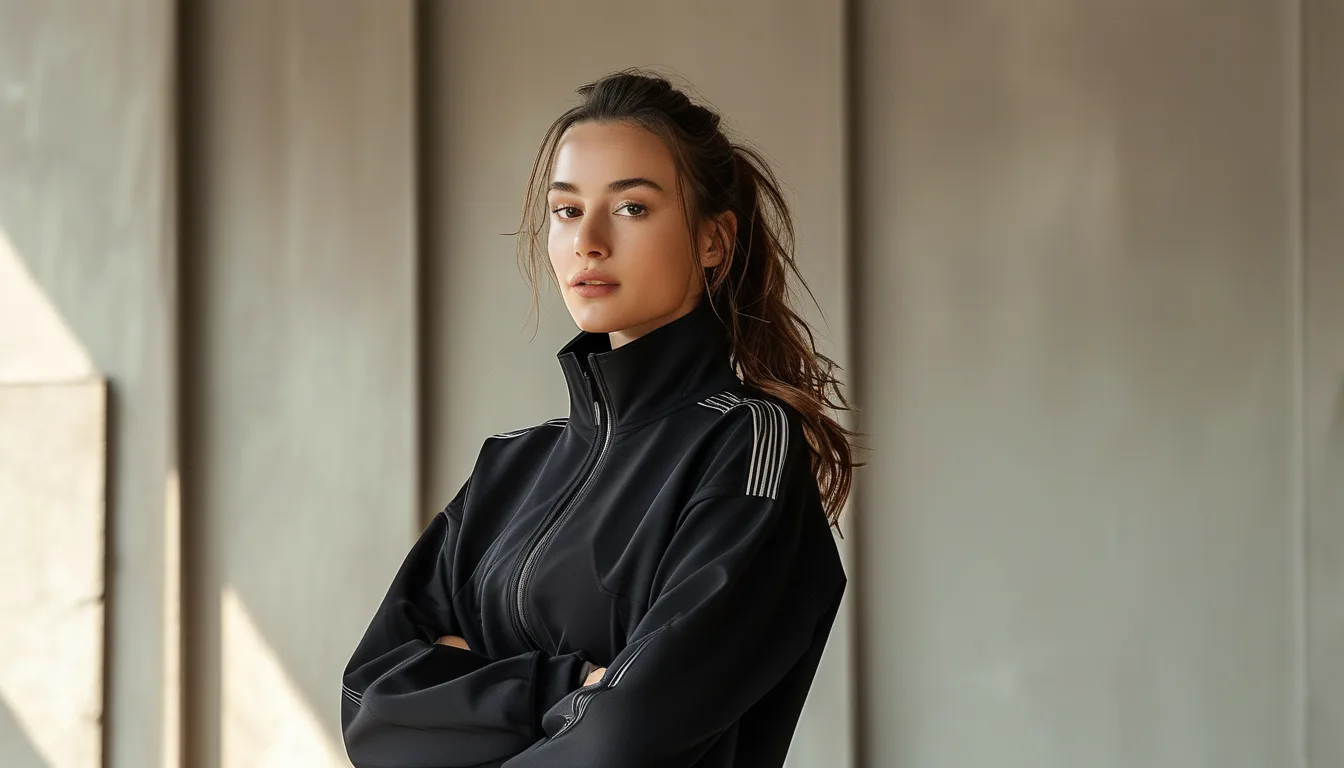
How to Add Texture to an All-Black Outfit (So It Doesn't Read as Flat)
Quick Answer: An all-black outfit reads as flat when every piece has the same surface finish. The fix is contrast in texture rather than contrast in colour: pair one matte piece with one that reflects light, and add one piece with visible surface structure - ribbing, cable, mesh, or a brushed finish. Two textures is the minimum; three is where it starts looking deliberate.
Black removes colour from the equation, which means every bit of visual interest has to come from surface and silhouette. That’s not a limitation - it’s a much smaller set of decisions than a colourful outfit needs.
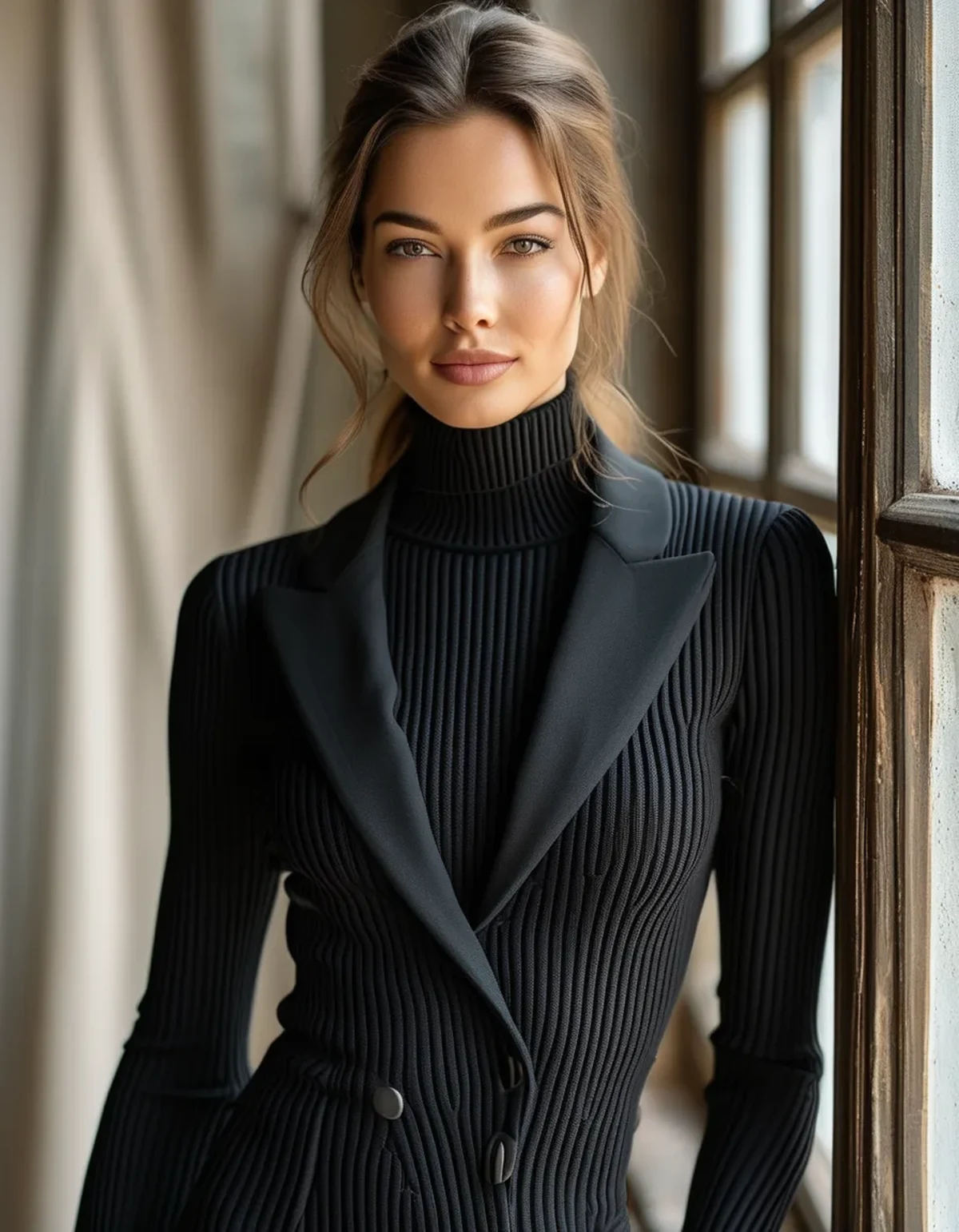
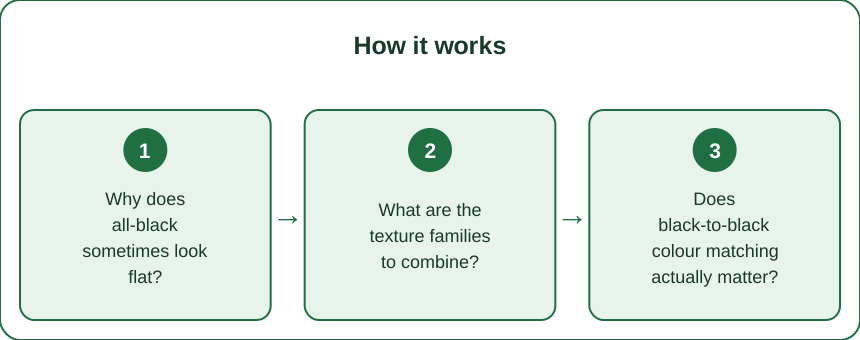
Why does all-black sometimes look flat?
Because your eye reads an outfit through light, and matching finishes give it nothing to read.
When every piece has the same surface - all smooth technical fabric, or all cotton jersey - light hits everything at the same angle and reflects back identically. Without colour differences to create boundaries, the whole silhouette merges into one shape. The result reads as a black blob rather than as separate garments.
It gets worse in two specific conditions:
- Flat overhead lighting, like a gym or an office ceiling, which minimises shadow
- Photos, where a camera compresses tonal range and merges near-identical blacks entirely
Add one reflective surface next to one matte surface and the eye immediately finds an edge. That single change is most of what separates an all-black outfit that looks styled from one that looks like laundry day.
The good news: you almost certainly already own the pieces. This is a combination problem, not a shopping problem.
What are the texture families to combine?
Four, and a good all-black outfit usually pulls from at least two of them.
1. Matte and absorbent. Cotton jersey, French terry, brushed fleece, suede, wool. Absorbs light, reads soft, recedes visually. This is what most basics are.
2. Smooth and reflective. Technical knits, satin, leather and leather-look, coated fabrics, high-shine nylon. Catches light along its curves, creates highlights, advances visually.
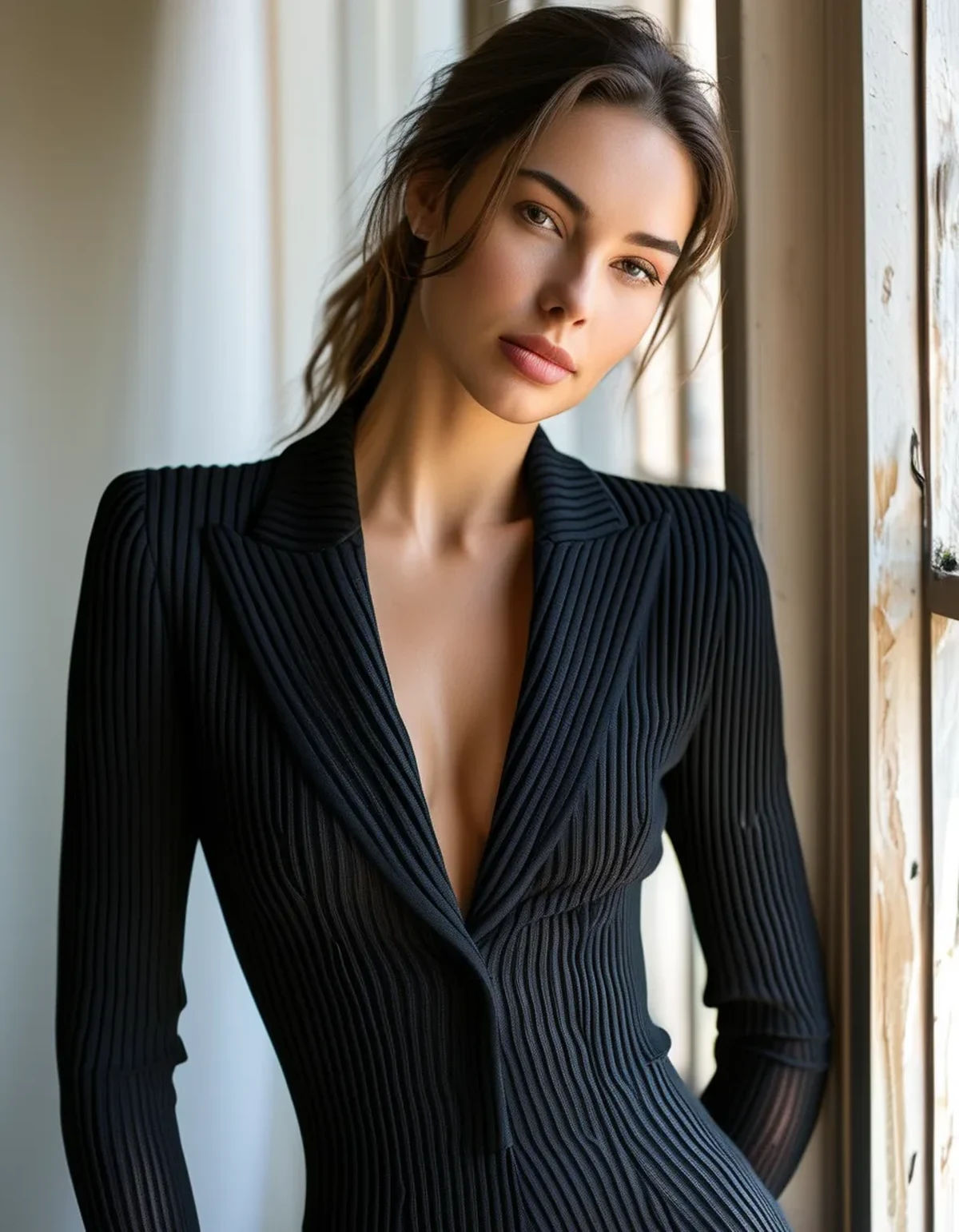
3. Structural. Ribbing, cable knit, waffle, quilting, pleating. Creates its own shadows regardless of lighting, which is why a ribbed piece works even in flat light where a smooth one doesn’t.
4. Open or sheer. Mesh, lace, open knit, perforated panels. Adds depth by letting a different tone show through from behind.
The reliable formula: one matte, one reflective, one structural. For example - matte cotton tee, smooth technical leggings, ribbed knit cardigan. Or brushed fleece hoodie, coated black jeans, chunky-knit scarf.
What not to do: three reflective pieces. Full shine head to toe reads as costume, and it’s the one combination that consistently looks worse than the flat version.
Does black-to-black colour matching actually matter?
Yes, but less than people fear, and the fix is straightforward.
Blacks genuinely differ. Cotton black tends to read warm and slightly brown; synthetic black reads cool and slightly blue; faded black reads grey. Two pieces from different families side by side can look like a mistake.
Three ways around it:
Separate the mismatched pieces. Warm black top with cool black bottoms is much less noticeable than warm black jacket over cool black top, because the jacket and top touch.
Use texture to justify the difference. A visibly different fabric is allowed to be a slightly different black - the eye reads it as intentional. Two identical-looking smooth fabrics in slightly different blacks reads as an accident.
Put the truest black closest to your face, since that’s where people look, and let variance live further down.
Check in daylight, not in your bedroom. Warm indoor lighting hides black mismatch almost completely, and then you step outside. Ten seconds by a window settles it.
On keeping black black: cold water, inside out, no tumble drying, and wash black with black. Most “faded” activewear is heat damage, and it isn’t reversible.
What Nobody Tells You About Wearing All Black
Silhouette carries more weight than usual. With colour removed, the outline is doing most of the communicating. A monochrome outfit with a deliberate shape - fitted top and volume below, or the reverse - looks styled even with only one texture. Same textures and a shapeless silhouette is where flat comes from.
Hardware counts as texture. A silver zip, a metal buckle, a chunky trainer sole. In an all-black outfit these read as intentional highlights rather than as details, and two or three of them can carry an outfit that’s otherwise fabric-matched.
Black shows lint, pet hair, and dust more than any other colour, and it’s the actual reason all-black outfits sometimes look cheap. A lint roller does more for the finished look than any styling decision on this list.
Sweat shows differently on different black fabrics - it appears immediately on cotton and technical matte finishes, and is nearly invisible on textured or ribbed surfaces. If you’re going somewhere you’ll be warm, choose the structural piece for the top half.
All-black photographs badly by default and beautifully with side lighting. If you’re photographing an outfit, turn side-on to a window. Overhead light is what flattens it.
Black doesn’t automatically read as slimming, and the belief that it does keeps people in shapes that don’t fit well. Fit does the work; colour just makes a poor fit slightly less obvious.
Three all-black formulas that always work
The gym formula. Ribbed seamless top + smooth compression leggings + matte zip jacket. Three textures, all functional, and the ribbing hides sweat while the smooth leggings catch light. Add a metal-detail trainer and it’s finished.
The off-duty formula. Oversized brushed hoodie + straight black jeans + leather-look boot or a shiny trainer. Matte on top, structured in the middle, reflective at the feet. The volume-to-slim silhouette does as much work as the textures.
The evening formula. Fitted matte knit + satin or coated wide-leg trouser + one piece of hardware. The satin catches light at every step, which is the entire point, and the matte knit stops it becoming too much.
A quick test before you leave: stand in front of a mirror and take one photo with your phone. If you can’t see where the top ends and the bottoms begin, add a structural piece or swap one item for a different finish. The camera is a harsher judge than the mirror, and it’s the one that matters if the outfit is going anywhere photographable.
As the weather turns, this gets easier rather than harder - autumn layering brings knits, wool, and outerwear, which are all texture-rich by nature.
FAQ: All-Black Outfit Questions, Answered
Is it okay if my blacks don’t match exactly?
Yes, if the fabrics visibly differ. Mismatch only reads as an error when two similar-looking surfaces are slightly different tones and are touching.
How do I stop black activewear fading?
Cold wash, inside out, gentle detergent, and never tumble dry. Heat degrades the elastane and lifts dye. Most fading is dryer damage, not washing.
Does all-black work in summer?
Black absorbs more heat in direct sun, which is real but often overstated for loose-fitting garments - airflow matters more than colour. Loose black linen in shade is comfortable; tight black synthetic in full sun is not.
How many textures is too many?
Four distinct textures in one outfit starts to look busy, which is a strange thing to say about monochrome but it happens. Three is the sweet spot; two is safe.
TL;DR:
- Flat all-black comes from every piece sharing the same surface finish
- Combine one matte, one reflective, and one structural piece
- Mismatched blacks are fine when the fabrics visibly differ - keep the truest black near your face
- Hardware and silhouette count as texture; a lint roller matters more than you’d think
- Photograph it side-on to a window, never under overhead light
All-black is the easiest outfit to get right and the easiest to get boring. The difference is one ribbed piece and one that catches the light.
See It in Motion
Seen here: High Waist Yoga Leggings with Side Pockets — shop it on bubblelime.com
Keep Reading
This article is for general informational and styling purposes only. Fit, sizing, and product availability may vary.