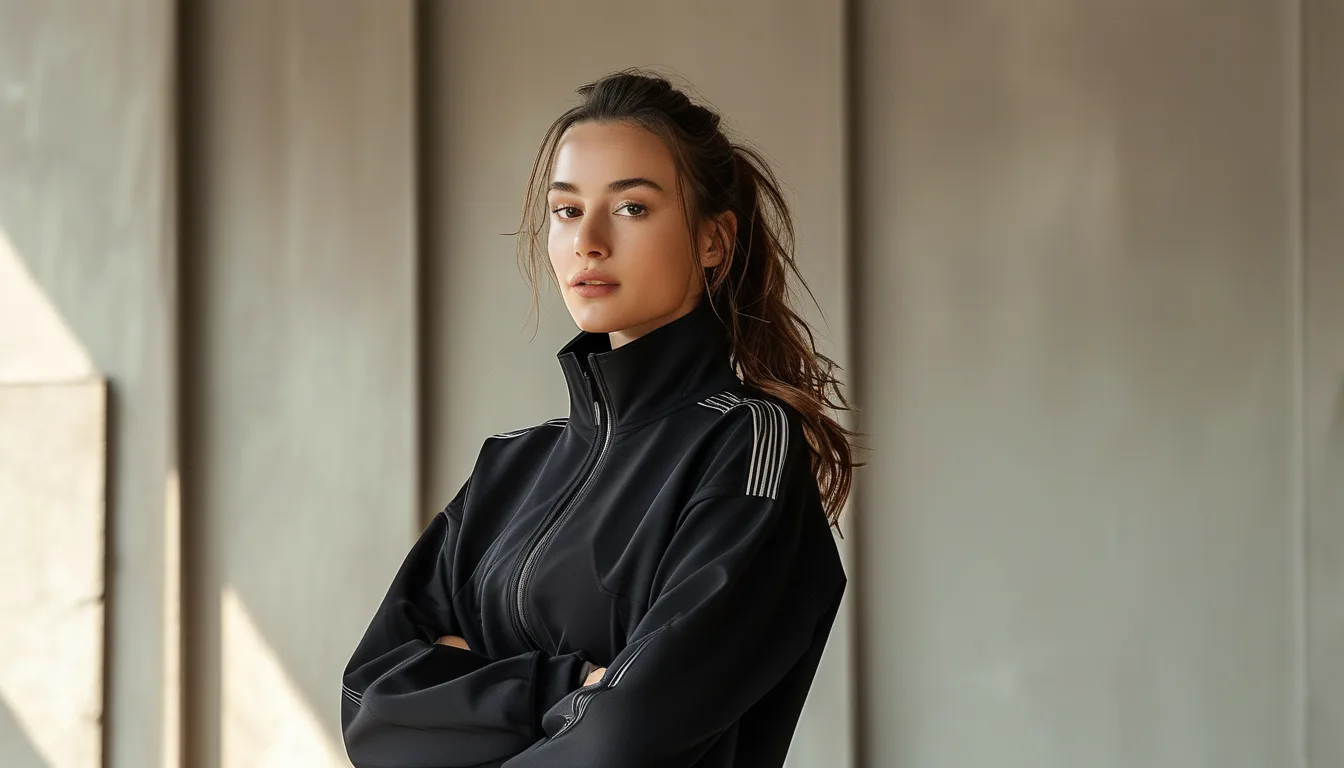
Wearing All Black in a Heatwave: What Actually Keeps You Cool
Quick Answer: Black does absorb more solar radiation than white, but only in direct sunlight, and the effect is largely cancelled by loose fit and breathable fabric. A loose black linen or modal outfit is cooler than a fitted white polyester one. Prioritise airflow and fibre first, colour last - and save fitted black synthetics for indoors and evenings.
Every August the same argument resurfaces. Black is unbearable in summer, says one side. Black is a uniform and I am not abandoning it, says the other. Both are partly right, and the actual physics is more interesting than either.
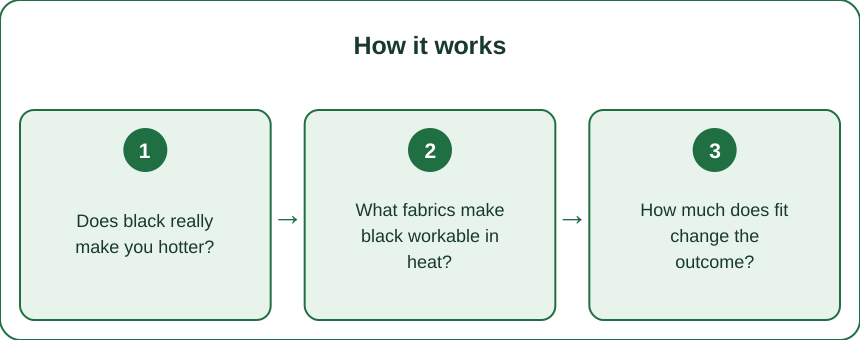
Does black really make you hotter?
In direct sun, yes - a black surface absorbs substantially more solar radiation than a white one, and the fabric surface gets measurably warmer. In shade or indoors, the difference is close to irrelevant.
But surface temperature is not the same as how hot you feel, and this is where the simple version breaks down.
What actually determines your comfort:
- Whether sweat can evaporate. Evaporation is your main cooling mechanism. A fabric that traps humid air against skin blocks it, regardless of colour.
- Whether air can move through the garment. Airflow carries heat and moisture away from the skin. A loose weave in a loose cut does this; a tight knit against skin does not.
- How close the fabric sits to the body. Fabric held a centimetre off the skin creates an insulating and ventilating gap. Fabric pressed against skin conducts heat directly.
- Fibre type. Linen and cotton wick and dry differently from polyester, and dark polyester in the sun is the worst combination available.
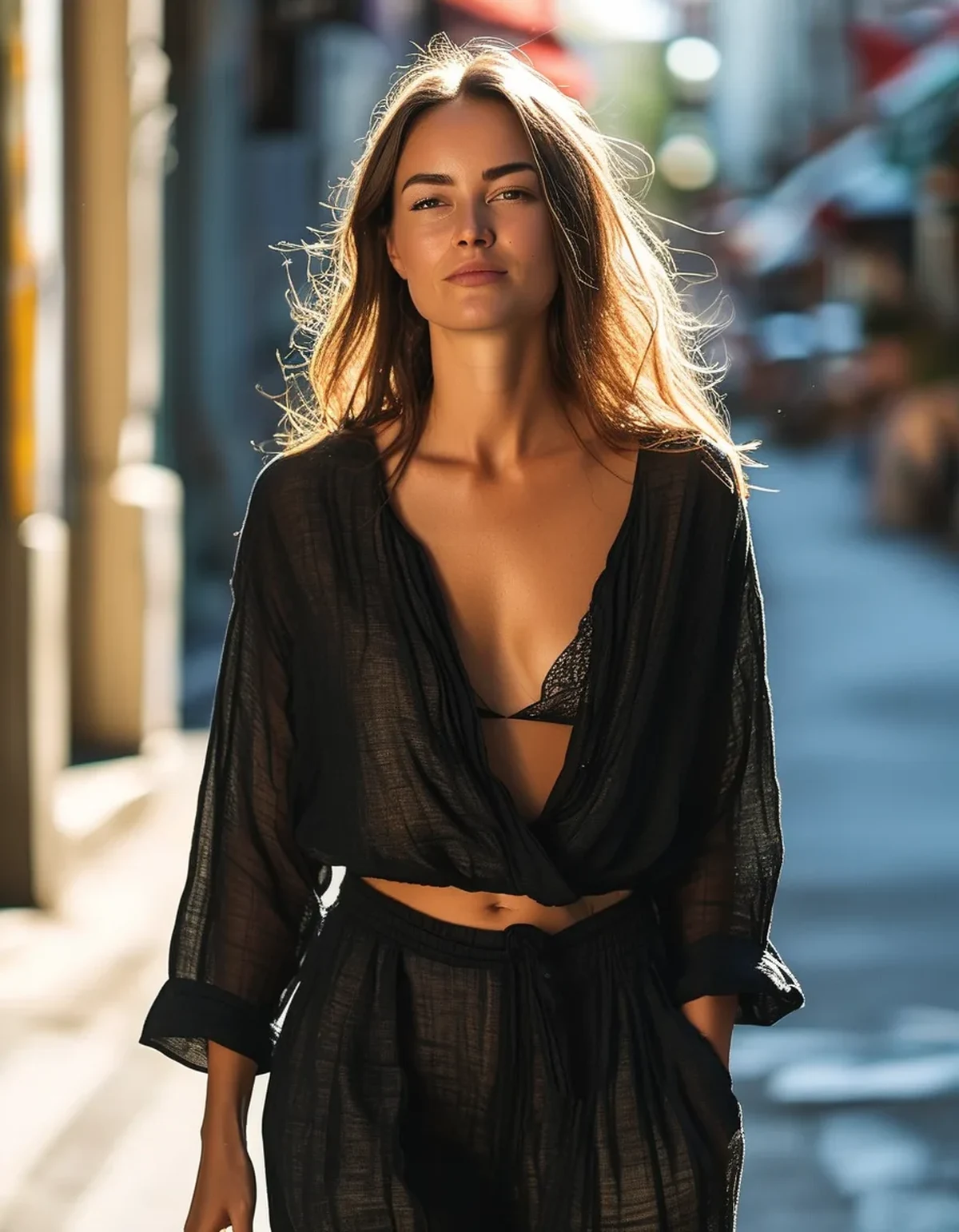
There is a well-known counter-example that undermines the colour-first argument entirely: many people in the hottest regions of the world traditionally wear loose black robes. Research on that has suggested the extra heat absorbed at the outer surface increases the convective airflow inside the garment, which can offset the absorption. The key word is loose.
What fabrics make black workable in heat?
Fibre and weave do more for you here than colour choice ever will.
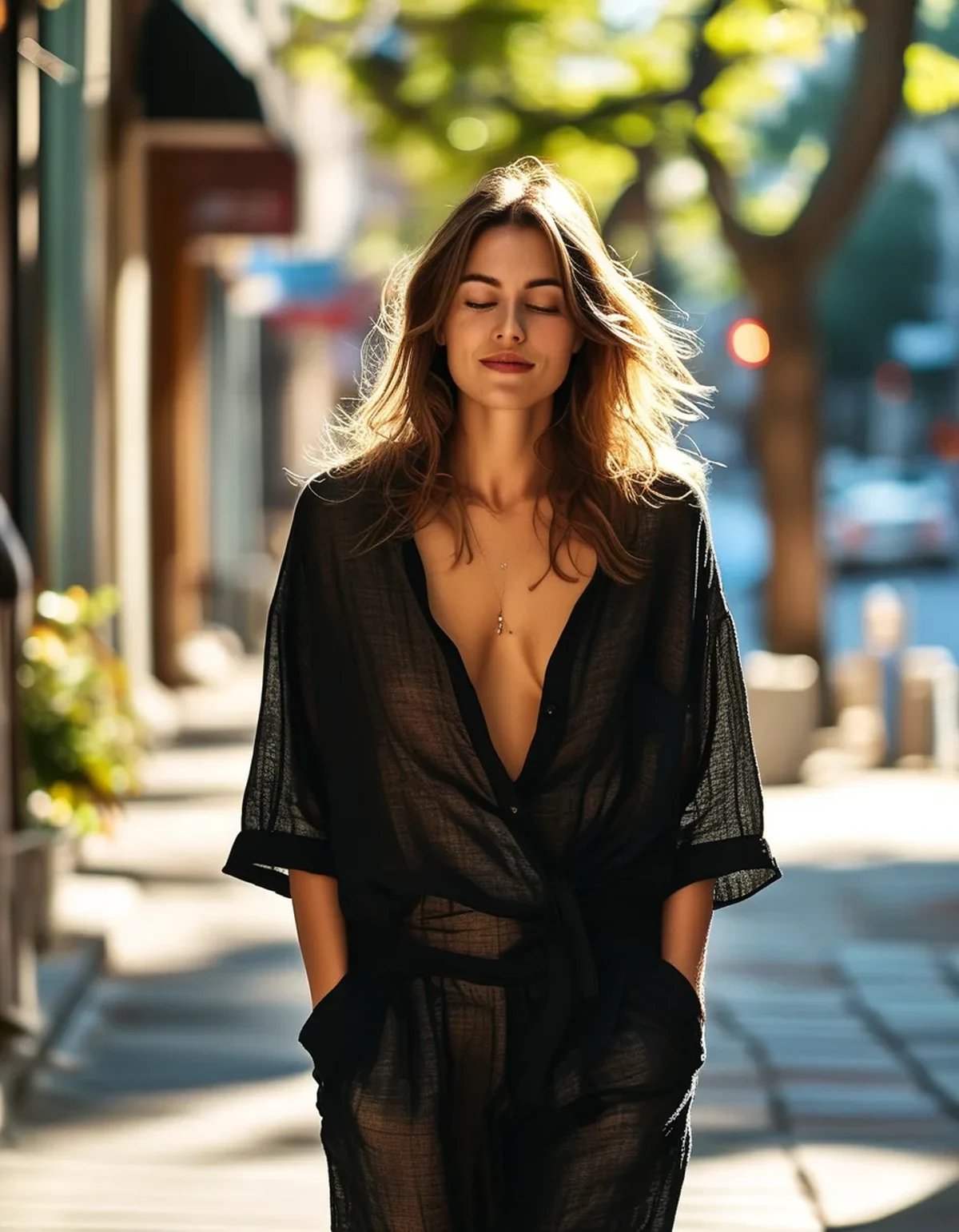
Linen and linen blends - the best hot-weather black. Loose weave, excellent airflow, and it dries fast. Black linen in a relaxed cut is genuinely comfortable at 30 degrees. It creases, which is a look you either accept or avoid.
Modal and TENCEL - the smooth option. Cool against the skin, good moisture handling, and they drape away from the body rather than clinging. Excellent for black tops and wide trousers.
Open-weave cotton - fine if it is loose. Cotton voile, poplin, and gauze work well. Heavy black cotton jersey does not - it absorbs sweat and holds it.
Merino, surprisingly - in fine weights. A 150gsm black merino tee handles heat better than most people expect because it manages moisture vapour rather than trapping it.
Polyester and nylon - keep for shade and evening. Dark synthetics in direct sun are the genuinely uncomfortable combination, and they hold odour in heat.
Watch the finishes too. Black fabric with a shiny or coated surface, or anything lined, blocks airflow at the point where you need it. An unlined black linen shirt and a lined black polyester one are not remotely the same garment.
How much does fit change the outcome?
More than colour. If you only change one thing this week, change the fit rather than the palette.
Leave a gap. Anywhere the fabric sits 1 to 2cm off the skin, you get an air layer that both insulates against radiant heat and lets warm humid air escape. That gap is the whole mechanism.
Open the top and bottom of the garment. Air needs an entry and an exit. A loose shirt with an open collar and an untucked hem creates a chimney effect as warm air rises and leaves at the neck. Tuck the same shirt in and you have sealed the exit.
Prioritise the torso. Your trunk generates most of your heat, so a loose top matters more than loose trousers.
Where fitted black is still fine: indoors, in the evening, in air conditioning, or for anything under an hour outside. Fitted black leggings in a studio are a non-issue; fitted black leggings for a two-hour walk at noon are a different question.
A practical hot-day all-black formula:
- Loose black linen or modal shirt, untucked, sleeves rolled
- Wide black linen trousers or a loose black midi skirt
- Flat sandals or breathable trainers
- Black cotton or straw hat, because shading your head is worth more than any fabric choice
That outfit is cooler than a fitted white synthetic one, which is the point people keep missing.
Myth vs Fact: Black Clothing in Summer
Myth: White is always cooler than black. Fact: Only in direct sun, and only with fit and fabric held equal. Loose black linen beats tight white polyester comfortably. Colour is roughly the fourth most important variable, behind airflow, fibre, and fit.
Myth: Black clothing offers no sun protection benefit. Fact: The opposite - darker colours generally absorb more UV and transmit less to the skin, so a black garment often has a higher UPF than the same fabric in white. Weave density matters most, but colour helps here rather than hurting.
Myth: Black shows sweat less, so it is the safe summer choice. Fact: Black hides light sweat well and shows heavy sweat clearly as glossy dark patches, plus it develops salt marks over time. Mid-tones and prints hide sweat more reliably than either black or white.
Myth: If black absorbs heat, a black hat is a bad idea. Fact: Any hat with a brim reduces the solar load on your head and face, and that shading effect dominates. A dark hat with good ventilation beats no hat by a wide margin.
Myth: You have to abandon the all-black wardrobe in August. Fact: You have to change the materials in it. The same silhouette in linen instead of heavy jersey covers most of the problem, and nobody has to look at you in beige.
How do you keep black looking black through a hot summer?
Heat and sun are hard on black, and faded black reads as tired far faster than faded colour does.
Wash cold and inside out. Most black fading is mechanical - fibre surface abrasion scattering light - rather than dye loss. Cold water and inside-out washing reduce the abrasion on the visible face.
Dry in the shade, never in direct sun. UV degrades dye and it degrades elastane at the same time. A black legging line-dried in full August sun ages visibly faster than one dried indoors.
Skip the fabric softener. It leaves a film that dulls black and reduces wicking, which is doubly bad in heat.
Wash sweaty blacks promptly. Salt from sweat is abrasive and slightly alkaline, and leaving it in the fabric accelerates both fading and elastane breakdown. If you cannot wash immediately, rinse.
Separate your blacks by depth. True black, washed-black, and charcoal read as a mismatch in bright sunlight even when they look fine indoors. Keeping newer blacks together for outfits solves what looks like a styling problem and is actually a laundry sorting problem.
Retire on tone, not on damage. A black piece that has drifted to dark grey will make everything paired with it look wrong. Demote it to indoor or layering use rather than trying to make it match.
FAQ: All-Black in Hot Weather Questions, Answered
Is there a temperature where black stops being viable?
Not really, but there is a fabric where it stops being viable. Above about 28 degrees in direct sun, dark synthetics and heavy jersey become genuinely uncomfortable. Linen and loose modal stay fine well above that.
Does black attract insects more in summer?
Some insects do respond to dark colours and to contrast, mosquitoes among them. If that is a specific problem where you are, light mid-tones and covered skin help more than any repellent-free colour choice.
Is black or white better for sun protection?
Black, generally, for the same fabric - darker dyes absorb more UV so less reaches your skin. Weave tightness matters more than colour, and a loose weave in any colour transmits more UV than a tight one.
Why does my black activewear feel hotter than my black clothes?
Because activewear is usually fitted synthetic knit - the three least helpful properties in heat, combined. Same colour, completely different thermal behaviour.
TL;DR:
- Black absorbs more solar heat but only in direct sun, and loose fit largely offsets it
- Airflow, fibre, and fit all matter more than colour for how hot you actually feel
- Linen, modal, open-weave cotton, and fine merino make black workable; dark synthetics do not
- Leave a 1 to 2cm gap from the skin and keep the hem untucked so warm air can escape
- Black usually offers better UV protection than white in the same fabric
The all-black wardrobe does not need a summer exemption. It needs a materials swap - the same silhouettes in linen and modal instead of jersey and polyester - and then the colour argument mostly stops applying.
See It in Motion
Seen here: Super High Waist Embossed Yoga Leggings with Inner Pocket — shop it on bubblelime.com
Keep Reading
This article is for general informational and styling purposes only. Fit, sizing, and product availability may vary.