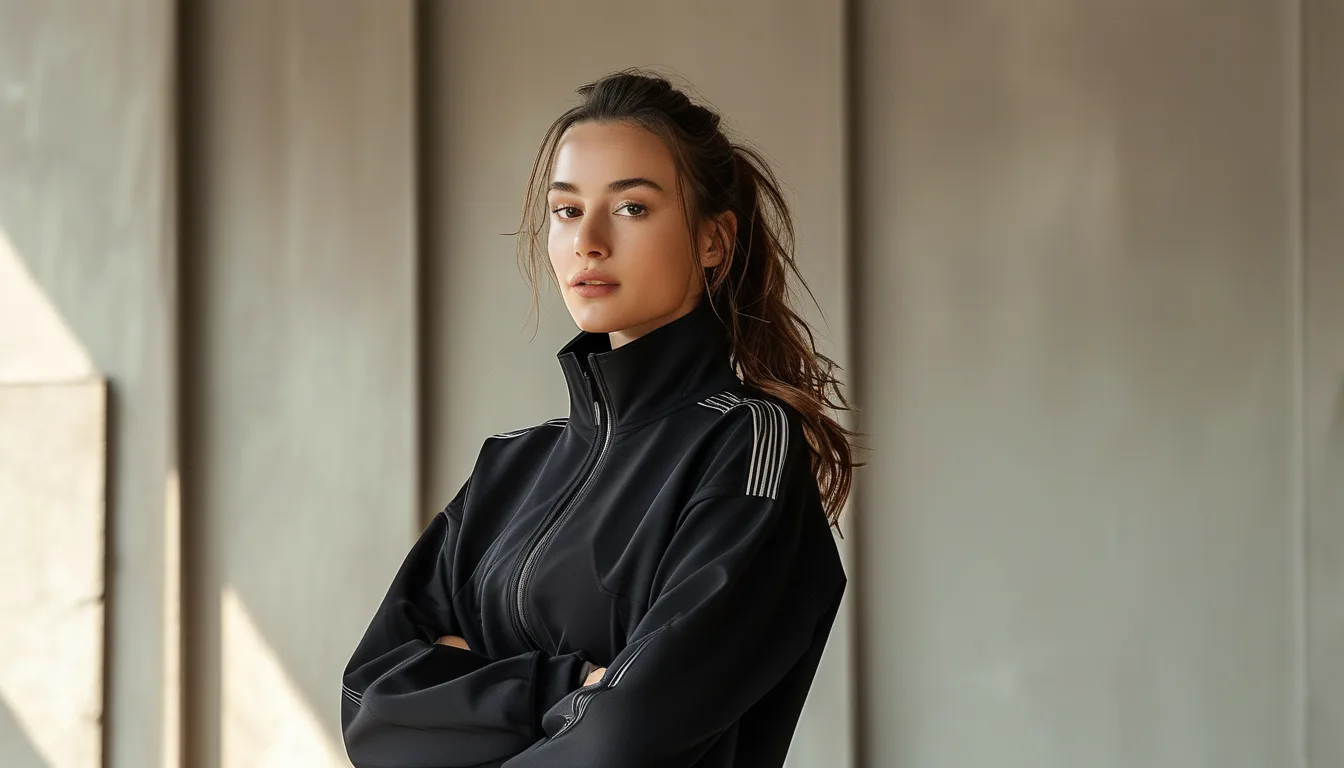
The Fabric Rule That Stops an All-Black Outfit Looking Flat
Quick Answer: An all-black outfit reads flat when every piece has the same surface finish, because black absorbs light and texture is the only thing left to create definition. Mix at least two of the three finish families - matte, sheen, and structured - and the outfit gains depth without adding a single colour. One glossy or ribbed piece is usually enough.
You put on black leggings, a black top, and a black jacket, and instead of looking sleek it looks like one continuous shape with no edges. Nothing is wrong with any individual piece.
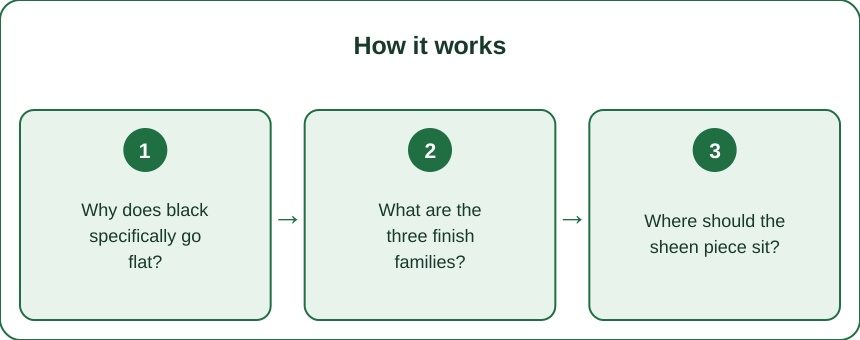
Why does black specifically go flat?
Because black works by absorbing light, and definition in an outfit comes from how light behaves on a surface.
With a colour, your eye separates two garments by hue - a navy top against black trousers reads as two pieces even in low light. Remove the hue difference and there is only one remaining cue: the way each fabric reflects light.
So three matte pieces in the same black produce no boundaries. The eye cannot find where one garment ends, and the silhouette collapses into a single block. This is why all-black often looks better in photographs taken in strong directional light and worse in a flat-lit room or an overhead-lit gym.
The related problem is black drift. Blacks are not identical - some are warm and slightly brown, some cool and slightly blue, some faded to charcoal after washing. Two slightly different blacks side by side read as a mistake, whereas two clearly different textures in the same black read as intentional.
Practical rule: if two black pieces are close but not matching, the fix is not to find a closer match. It is to add enough texture contrast that the eye reads texture rather than shade.
What are the three finish families?
Sorting your black pieces into these three makes the whole thing mechanical rather than intuitive.
Matte. Absorbs light almost entirely. Cotton jersey, brushed fleece, most standard leggings, wool, suede. This is what almost everyone’s wardrobe is full of, which is why the flat problem is so common.
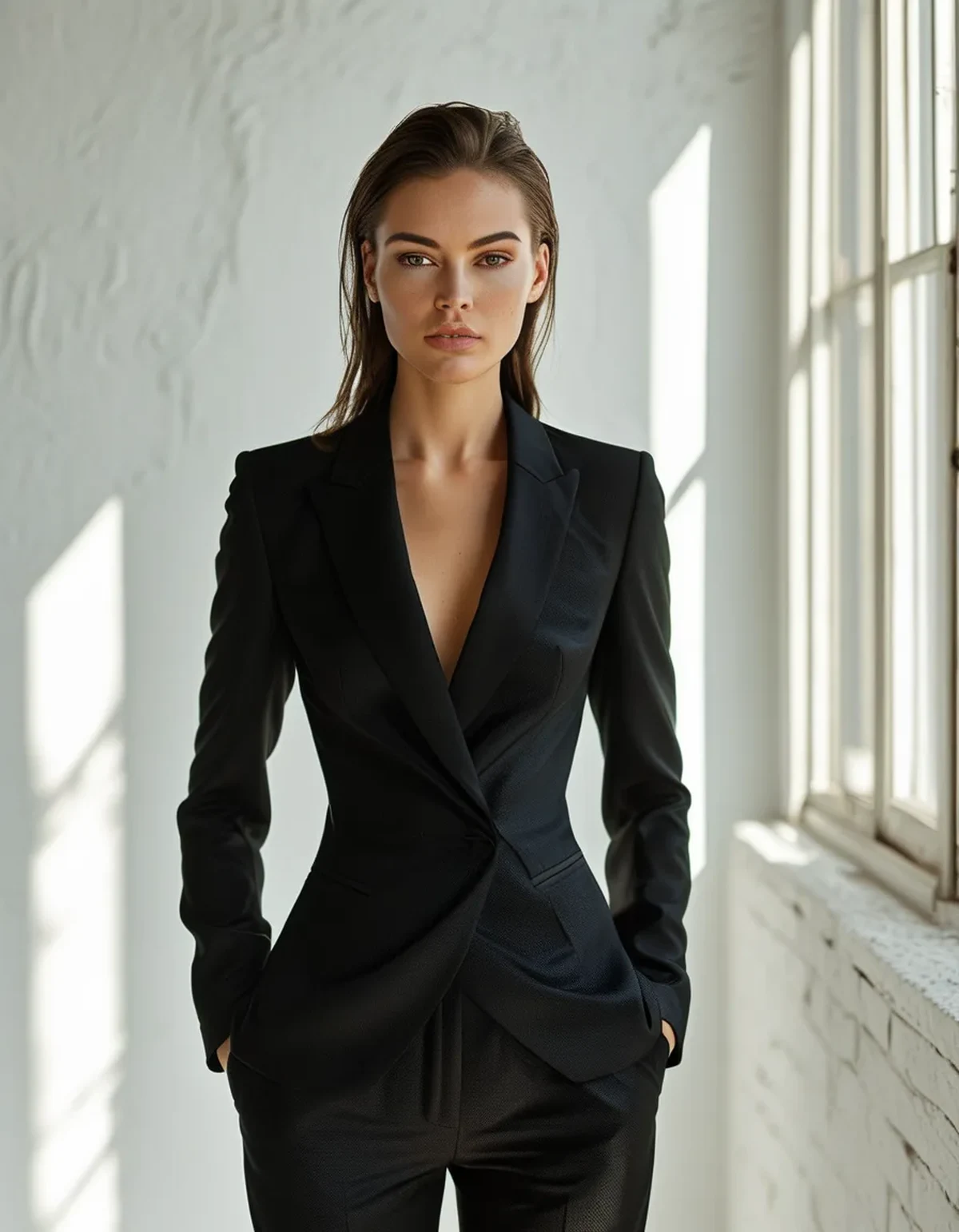
Sheen. Reflects light along its surface. Satin, technical nylon, coated or faux-leather finishes, glossy compression fabrics, silk. Sheen creates highlight lines that trace the shape of the body, which is what gives the outfit its edges back.
Structured. Neither shiny nor flat, but with a physical surface that creates its own micro-shadows. Ribbed knit, cable knit, denim twill, corduroy, mesh panels, quilting, and anything with visible seaming.
The rule: use at least two families in an outfit, and if you use only two, make sure one of them is not matte.
Simple combinations that work:
- Matte leggings + ribbed top (matte + structured)
- Matte top + technical nylon jacket (matte + sheen)
- Ribbed knit + satin skirt (structured + sheen)
- Matte base + mesh panel detail + a glossy shoe (all three)
Where should the sheen piece sit?
Placement changes the effect substantially, and this is where people get it wrong even when they have the right pieces.
Sheen at the top draws the eye upward and toward the face, which is usually flattering and is the safest default. A glossy jacket, a satin-panel top, or a technical shell over matte bottoms.
Sheen at the bottom is more striking but harder to wear - light-reflecting fabric on the largest area of the body attracts a lot of attention. It works well with a genuinely matte, slightly oversized top to balance it.
Sheen in small doses is the easiest entry point: a shoe, a bag, a belt, or a zip detail. One small glossy item against an all-matte outfit fixes flatness surprisingly effectively because it gives the eye a reference point for what black is doing in the light.
Avoid sheen top and bottom with nothing matte between. Two large reflective surfaces compete, and the outfit reads as a costume rather than an outfit. If you want both, break them with a matte mid layer.
A note on gym contexts: overhead studio lighting is unusually flat, which exaggerates the problem. A ribbed or seamed piece performs better there than a glossy one, because structure creates its own shadows regardless of the light direction.
Myth vs Fact: Wearing All Black
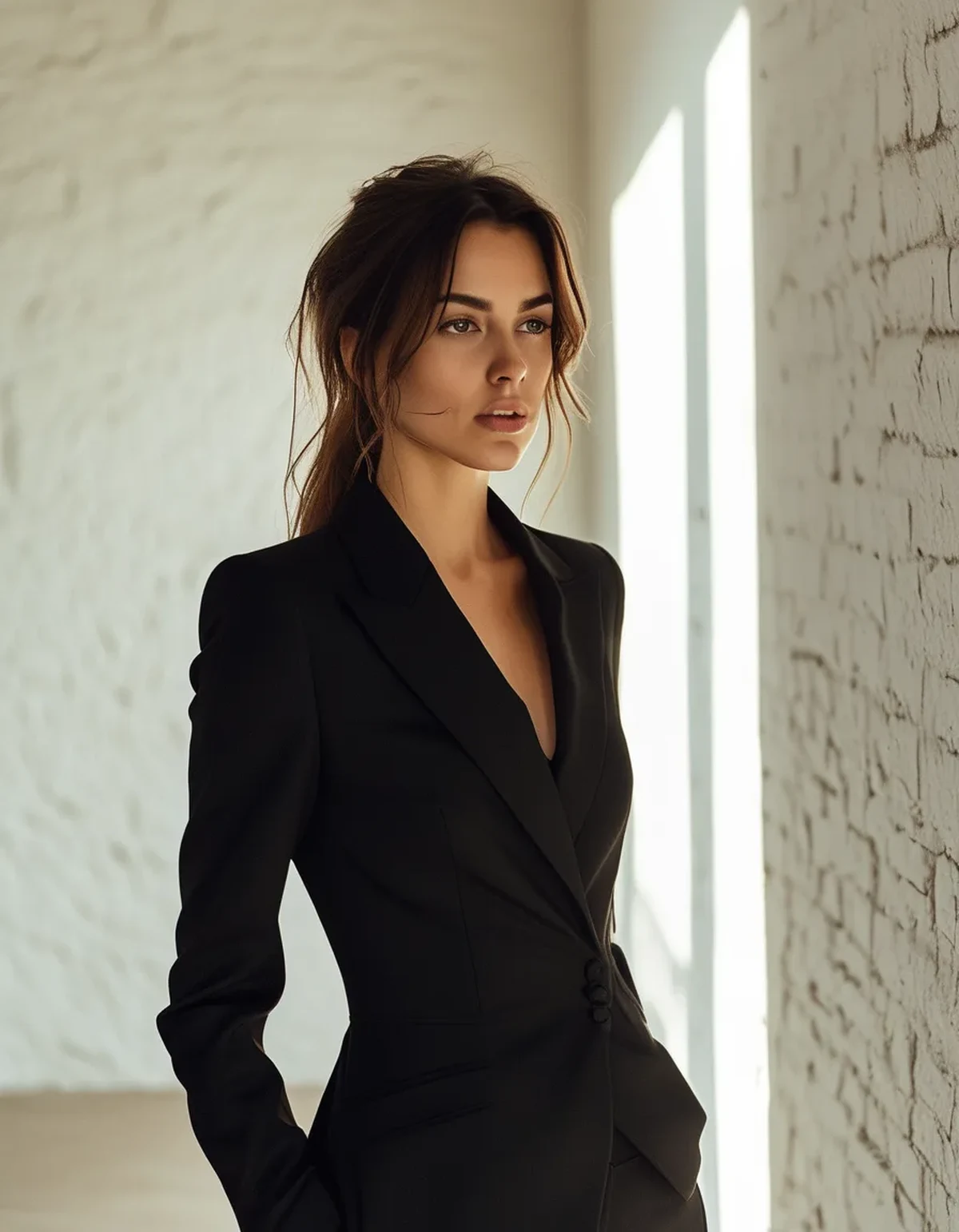
Myth: All black is always slimming. Fact: Black minimises the appearance of edges, which can be flattering - but with zero texture contrast it also removes waist definition and shape entirely. A well-textured all-black outfit is far more flattering than a flat one, because the eye can find the shape.
Myth: You need to match your blacks exactly. Fact: Exact matching across different fabrics is nearly impossible, because dye behaves differently on cotton, nylon, and wool. Chasing an exact match is a losing game. Contrast the textures enough and mismatched shades stop reading as an error.
Myth: All black is the low-effort option. Fact: It is the low-decision option, which is not the same. Colour does some of the work for you; without it, fabric choice has to do all of it. A good all-black outfit involves more thought than a two-colour one, not less.
Myth: Black never fades if you wash it properly. Fact: It fades regardless, just more slowly. Cold water, inside out, and no tumble drying slow it considerably. The realistic approach is to accept that older blacks migrate toward charcoal and pair them with each other rather than with new pieces.
Myth: Accessories should also be black to keep the look clean. Fact: They can be, but they should not be the same finish. A matte black bag against a matte black outfit disappears entirely, which wastes the piece.
How do you audit your own black pieces?
Ten minutes, and it changes how you get dressed considerably.
Lay all your black pieces on a bed near a window. Natural side light, not overhead. This is the single most revealing thing you can do, because the light shows exactly what each fabric does.
Sort into three piles: matte, sheen, structured. Most people find they have eight matte pieces and nothing else, which explains everything.
Then note the shade drift. Group them into warm-black, true-black, and faded-charcoal. Pieces in the same drift group pair easily; pieces across groups need texture contrast to work.
What to buy, if the audit shows a gap:
- If everything is matte: one structured piece - a ribbed knit top or a seamed jacket - is the highest-value single addition, because it works in every light condition
- One sheen piece second, ideally outerwear, since a jacket layers over anything
- A textured accessory third - a woven or patent shoe, or a quilted bag
Retire faded pieces from all-black outfits, not from the wardrobe. A charcoal-drifted top works fine with grey or navy; it just fights against true black.
After the audit, getting dressed in all black becomes a two-second check: do I have two finish families on? If not, swap one piece.
FAQ: All-Black Outfit Questions, Answered
How do I stop black clothes fading so quickly?
Wash cold, inside out, on a shorter cycle, with a detergent formulated for darks, and skip the tumble dryer. Heat and agitation are what strip the dye. Line drying away from direct sun makes a noticeable difference over a year.
Can I mix black and very dark navy?
It works if the textures differ clearly and the light is good, and it reads as an error under yellow indoor light. If you want it to look deliberate, make the two pieces obviously different in finish rather than nearly matching.
Does this rule apply to all-white outfits too?
Partly. White reflects rather than absorbs, so it shows shape more readily on its own - but texture mixing still improves it, and it also has the shade-drift problem between bright white and off-white.
What is the single easiest fix if I own nothing textured?
Footwear. A shoe with a different finish - patent, suede, or a chunky textured sole - breaks up the block instantly and costs nothing in terms of styling effort.
Is all black a good choice for photos?
Only with directional light and texture contrast. In flat overhead light with all-matte pieces, the outfit merges into a silhouette in photographs, which is exactly the outcome most people are trying to avoid.
TL;DR:
- All black goes flat because black absorbs light, leaving texture as the only source of definition
- Sort black pieces into matte, sheen, and structured, and wear at least two families
- Sheen near the face is the safest placement; a single glossy accessory fixes a lot for very little effort
- Do not chase exact shade matching - contrast texture instead and mismatched blacks stop reading as errors
- Audit your black pieces in side light; most people are all-matte and one structured piece closes the gap
The outfit was never the problem and neither was the colour. Black simply asks you to make one decision that colour usually makes for you, and once texture becomes the thing you check, all black goes back to looking as sharp as it is supposed to.
See It in Motion
Seen here: Super High Waist Embossed Yoga Leggings with Inner Pocket — shop it on bubblelime.com
Keep Reading
This article is for general informational and styling purposes only. Fit, sizing, and product availability may vary.